What does refinishing a staircase involve?
Refinishing a staircase means taking the old finish and the worn top layer of wood off every tread, nosing and stained surface, then putting new stain and finish back on. It's the same idea as refinishing a floor, but nearly all of it is detail work, one step at a time.
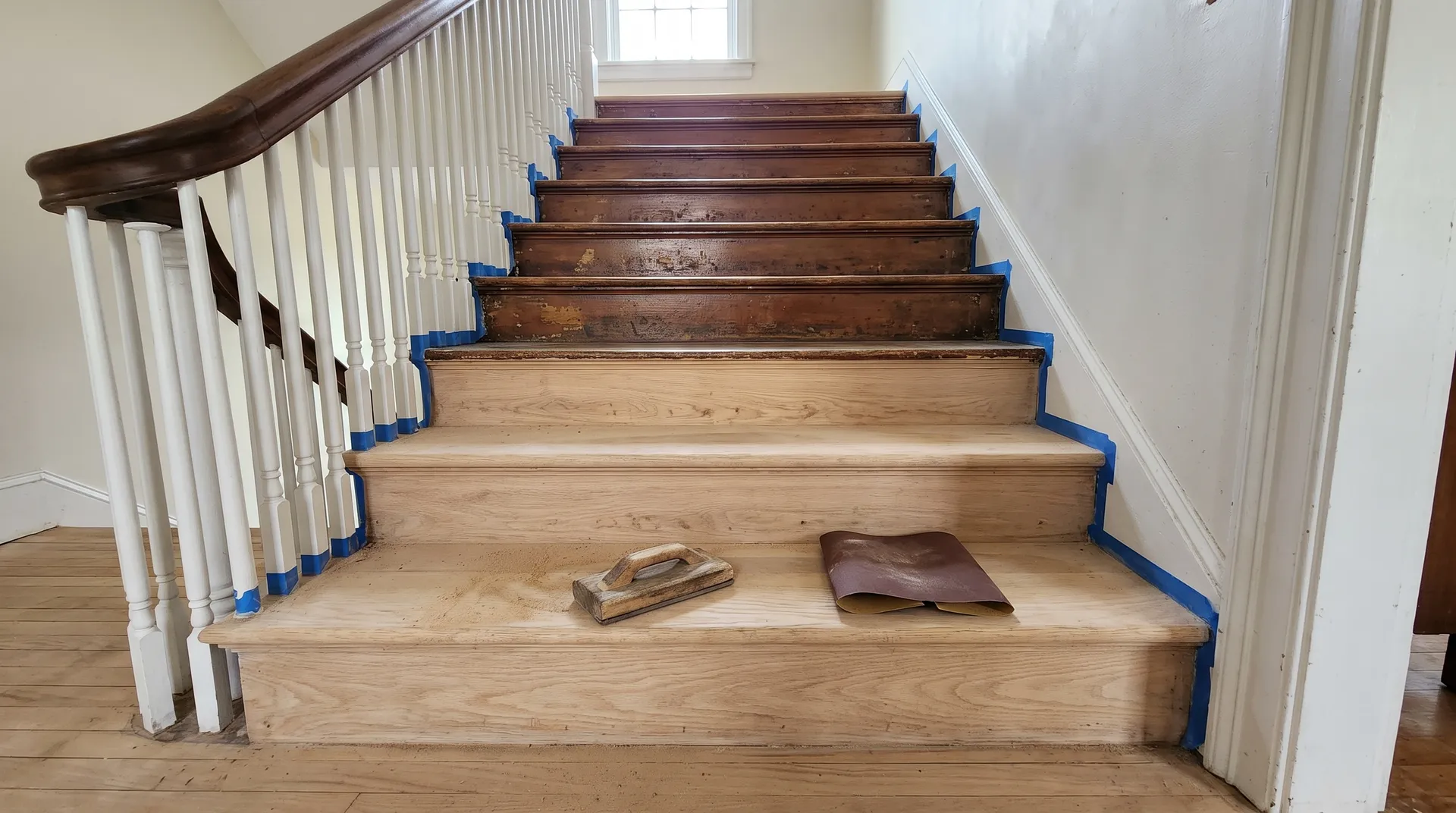
The usual order goes like this. First comes prep: remove any carpet, tack strip and staples, protect the walls and the floor at the bottom, and set or fill any nails that stick up. Next the treads are sanded, usually with an edger and smaller detail sanders, then hand-scraped and hand-sanded into the corners where the tread meets the riser and the skirt board. The nosing (the rounded front edge) is sanded by hand so it keeps its shape. Risers are either sanded and stained to match, or primed and painted, which is a popular look.
After sanding, everything gets vacuumed and wiped down. Stain goes on if you're changing the color, and then two or three coats of finish, with a light buff between coats. Railings, balusters and newel posts are a separate job. They can be sanded and refinished too, but turned spindles take a lot of hand work, so many homeowners keep the railing as it is, or paint it, and only refinish the treads.
Stairs get more wear than almost any other spot in a house. Feet land on the same front few inches of every tread, so that's where the finish wears through first. A full sand and refinish takes those worn spots off and gives the whole staircase an even surface again.
How to restain a wooden staircase
To restain a wooden staircase, you have to sand it back to bare wood first, because new stain won't soak through an old finish. Stain only colors raw wood fibers, so wiping new stain over the old varnish or polyurethane just leaves a sticky film that never dries right.
Going darker is the easier direction. Once the treads are sanded clean, a darker stain covers the old color and hides small differences in the wood. Going lighter is harder. Old dark stain can soak deep into soft or open-grained wood, so it may take more sanding to get rid of it, and some woods, pine especially, can keep a shadow of the old color.
Always test the stain on a sanded spot first, like the bottom tread or a spare board. The same stain can look quite different on oak, pine and maple, and stairs are often built from a different wood than the floor next to them. If your stairs run into a hardwood hallway or landing, decide whether you want them to match. Matching usually means sanding and staining both, or staining the stairs carefully to blend with the floor's existing color.
For railings and balusters you don't want to fully sand, gel stain is a common shortcut. It sits more on the surface and can darken a railing after a light scuff-sand, but it won't give the same depth as stain on bare wood, and it doesn't work for lightening.
How long before you can walk on refinished or painted stairs?
With a water-based finish, you can usually walk on the stairs carefully in socks about 24 hours after the last coat. With an oil-based finish, plan on 24 to 48 hours. Painted risers or treads are usually dry to the touch in an hour or two, but give them about a day before light foot traffic.
Dry isn't the same as cured. Water-based finishes keep hardening for about two weeks, and oil-based finishes for about 30 days. During that time, skip shoes, don't put a runner or rug back on the stairs, and don't drag anything heavy up them. Painted stairs need a similar break. Most latex paints take a couple of weeks to fully harden, and a runner laid too soon can stick or leave marks.
Temperature and humidity change these times. Most finishes want the room somewhere in the mid-60s to mid-70s. In a central Pennsylvania winter, a cold stairwell or one right next to a drafty front door can stretch drying times, and very dry heated air can make a finish set up faster than it should. Keep the heat steady and steady air moving through the house while it dries.
If the staircase is the only way to the bedrooms, one common approach is to finish every other step first, let those dry, and then do the rest. It takes longer overall, but you can still get up and down carefully the whole time. The other option is to plan the work around a day or two away from that floor of the house.
Can I refinish a hardwood staircase myself?
Yes, a handy homeowner can refinish a staircase, but it's slow, detailed work, and most of the trouble comes from the sanding. Expect it to take a few weekends instead of a few days, and to do most of it on your knees with a detail sander, scrapers and sandpaper.
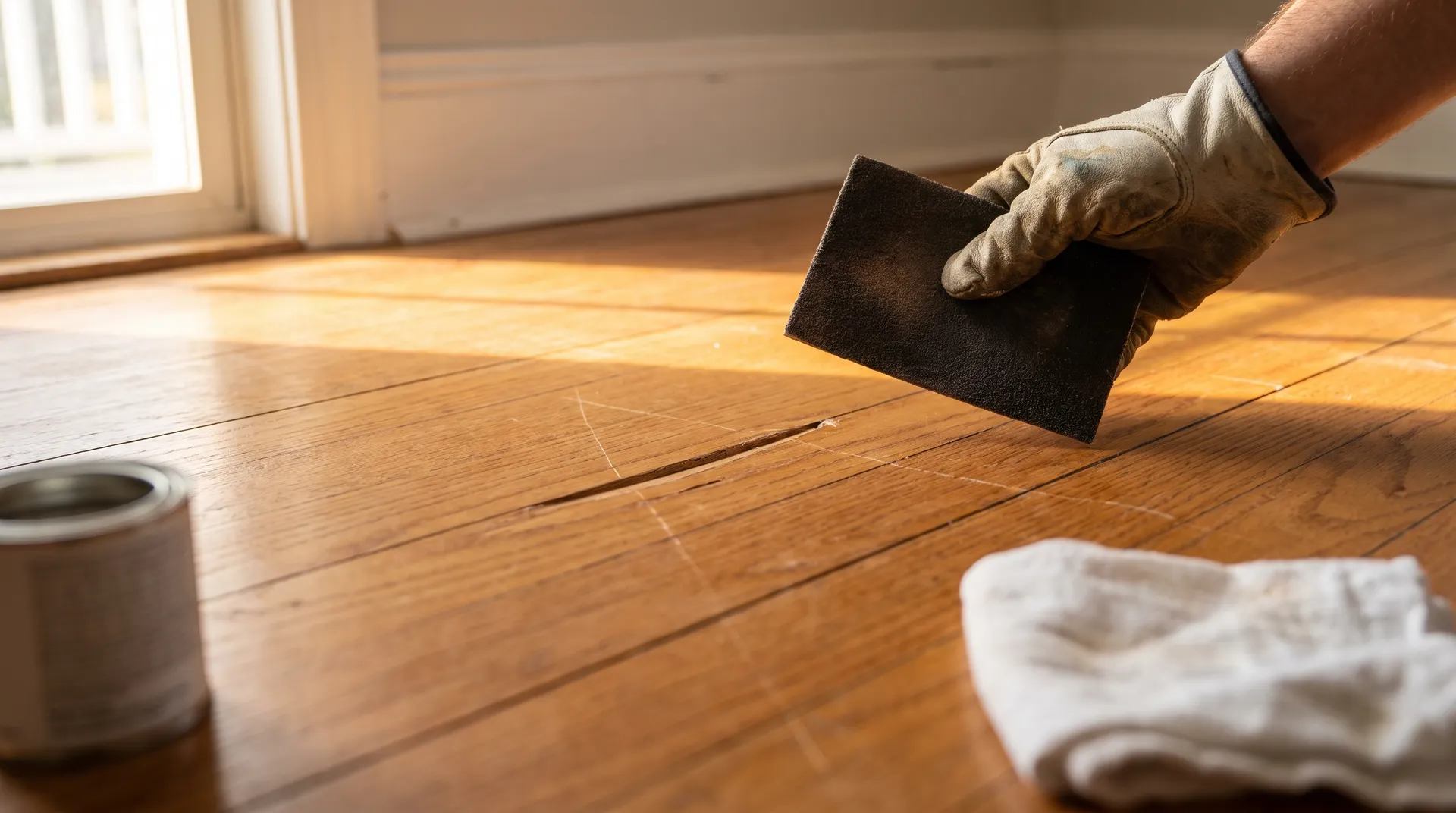
The places DIY jobs usually go wrong are easy to name. Orbital and palm sanders can leave swirl marks that only show up once stain goes on. Sanding too hard at the nosing flattens the rounded edge. Corners that weren't sanded clean come out blotchy or a different color. Stain laid on too heavy, or not wiped evenly, leaves lap marks. Dust gets into the wet finish, and the stairwell is the hardest spot in the house to keep clean, because air and dust move straight up through it.
If your stairs only look dull and the finish isn't worn through to bare wood, you might not need a full sand at all. A light abrasion and a fresh coat of finish (often called a screen and recoat, or clean and recoat) is a much smaller job, and it's the easier one to do yourself.
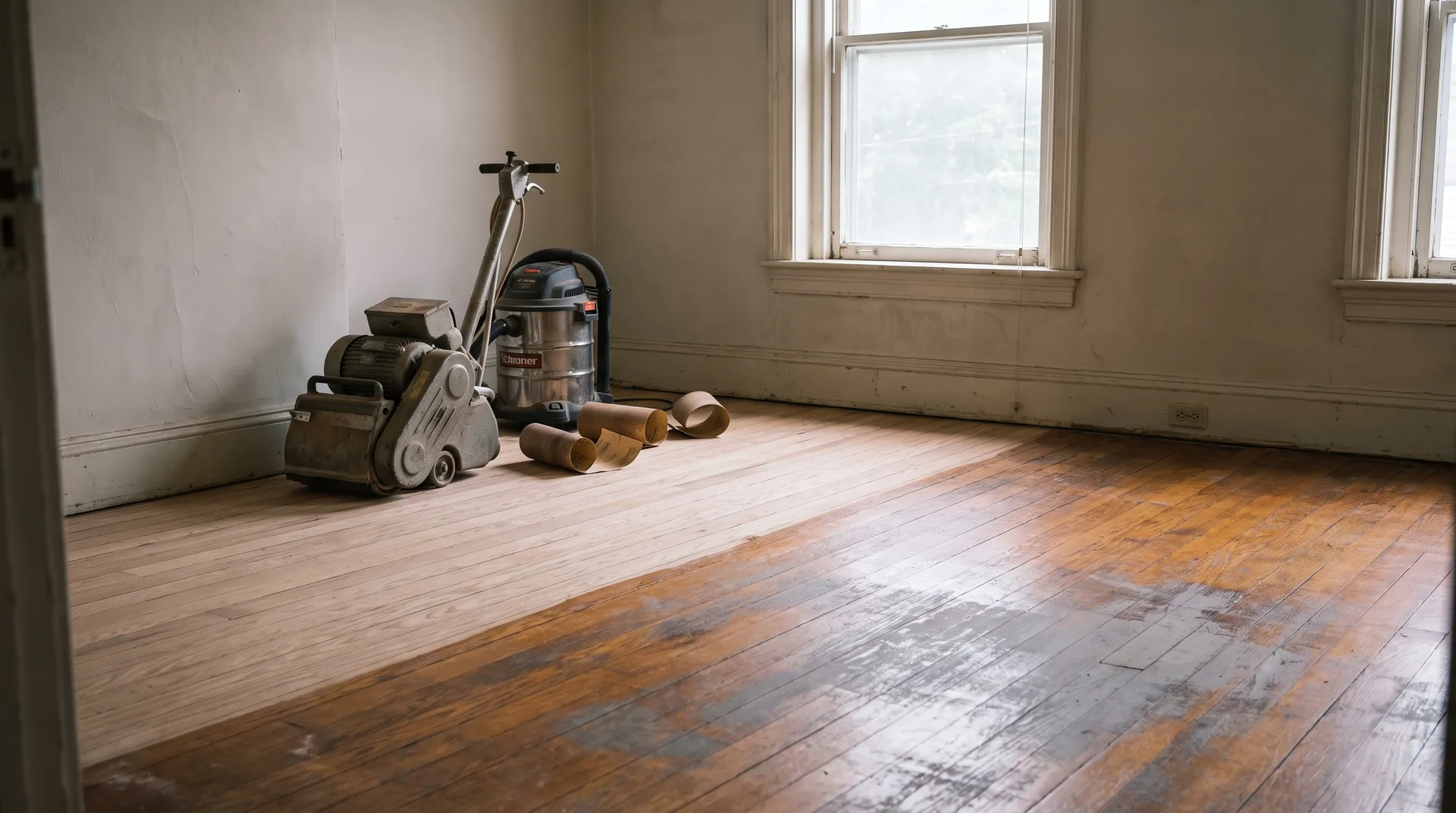
Hiring the work out makes more sense when there's stain to change, finish worn through to gray wood on the treads, old carpet damage to repair, or when the stairs have to be usable quickly. A pro setup with dust-collecting sanders also keeps the mess out of the rest of the house. The same reasoning applies to the bigger question of refinishing a whole floor yourself: it's possible, but renting a drum sander with no experience is the most common way people gouge a floor.
How much is it to refinish hardwood stairs?
The cost of refinishing hardwood stairs depends mostly on how many steps you have and how much detail work they need, so it's priced job by job, not by a flat rate. Two staircases with the same number of steps can be quite different jobs.
The things that move the price most are the number of treads and landings, whether the risers are stained or painted, and whether the railing, balusters and newel posts are part of the job. Carpet removal matters too, including pulling every staple and filling the holes. So do repairs like cracked or loose treads and replaced nosings, and whether you're changing the stain color or keeping a natural finish. Open stairs, with a side you can see from the room, have more exposed edges to sand and finish than stairs closed in by walls on both sides.
A rough idea of the scope helps when you're comparing quotes. Ask each contractor exactly what's included: sanding the treads only, or the risers and skirt boards too, how many coats of finish, which type of finish, and whether the railings are included. Quotes that look far apart are often just covering different amounts of work.
Staircases in central Pennsylvania homes: what to expect
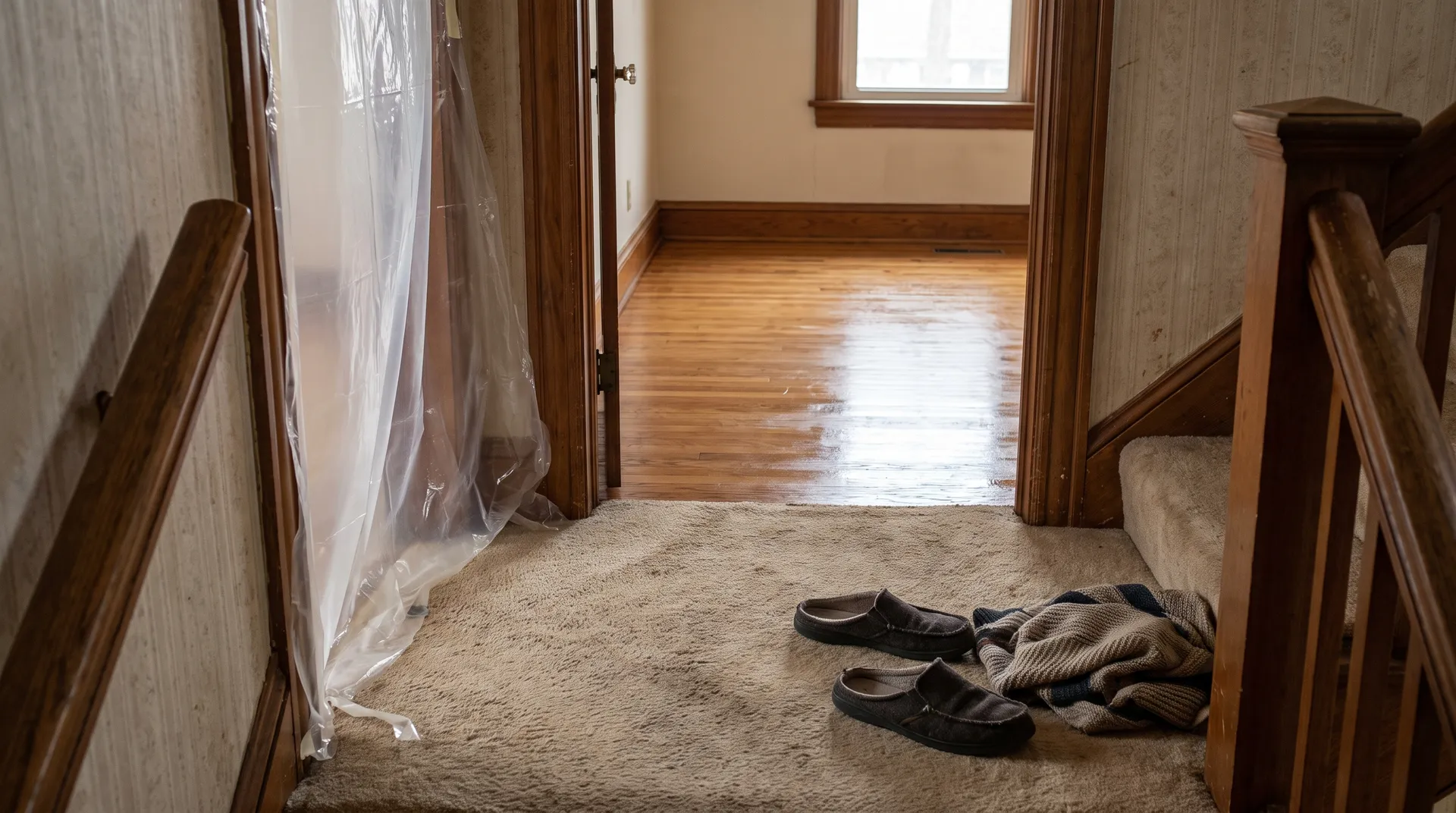
Many staircases in central Pennsylvania are older than the carpet on them, and what's under that carpet decides what refinishing can do. In farmhouses and older town homes, treads are often oak, but some are pine or a softer wood that was never meant to be seen and only ever had carpet over it.
When you pull up the carpet, look for a few things: whether the treads are solid hardwood or a covered plywood or particleboard step, how many staple and tack-strip holes there are, paint drips or glue on the edges, and whether the nosing is a separate piece that has worked loose. Solid hardwood treads can almost always be refinished. Construction-grade treads may be better replaced, or painted.
Our seasons matter too. Wood moves with humidity, so gaps that show on the stairs in a dry January may close up again by July, and a tread that squeaks in winter may be quiet in summer. Fall and early spring are comfortable times to refinish, because the house isn't sealed up tight for winter and the air isn't as damp as it is in midsummer. If you want the stairs done before holiday guests, remember the curing time and leave a couple of weeks before heavy traffic and runners go back on.
Charlie's Sanding & Refinishing is a hardwood floor company based in McAlisterville, PA, that sands, stains and refinishes floors and staircases within about 60 miles, with State College and Harrisburg as our main cities. On stairs we use a professional vacuum system that captures up to 99% of the dust, and when stairs meet an existing floor we match the color and finish so the transition looks natural. We work with both water-based and oil-based finishes, depending on the look you want and how the house is used.
Questions we hear
Can I stay in my house while my stairs or floors are refinished?
Usually, yes. Water-based finishes have a much lower odor and dry within a few hours between coats, so many families stay home and simply keep off the stairs while they dry. Oil-based finishes give off stronger fumes for a day or more, so some people prefer to stay elsewhere for a night, especially with small children, pets, or someone sensitive to smells. If the stairs are the only way to the bedrooms, plan around finishing every other step at a time or a day away from that floor.
Should stair risers be painted or stained?
Either works, and it's mostly about the look you want. Stained risers that match the treads look traditional and warm. White or painted risers under stained treads give more contrast, hide scuffs from toes better, and are easier to touch up. Painting is also a good fix when the risers are a cheaper wood that doesn't stain evenly.
Can carpeted stairs be refinished as hardwood?
Often, if the treads underneath are solid hardwood. Pull back the carpet on one step to check before you commit. Staple and tack-strip holes can be filled, but if the treads turn out to be plywood, particleboard, or soft construction-grade wood, they'll usually need to be replaced with new hardwood treads or painted instead.
How often do hardwood stairs need refinishing?
Stairs wear faster than most floors, because every step lands in the same spot. In a busy household, a light screen and recoat every few years can keep the finish from wearing through, and a full sand and refinish is usually needed only once the finish is worn down to bare wood or you want a new color. Keeping a fresh coat of finish on them is the cheapest way to put off a full sanding.
Can you use dish soap (fairy liquid) to clean wooden floors and stairs?
A few drops of mild dish soap in a bucket of water won't harm a sealed wood floor once in a while, but it isn't the right cleaner for regular use. Soap can leave a dull film that collects dirt and makes polyurethane look cloudy. For everyday cleaning, use a pH-neutral cleaner made for finished wood and a damp mop, not a wet one, and never let water sit on the boards.
Is water-based or oil-based finish better for stairs?
Both work well on stairs, and each has trade-offs. Water-based finish dries clear, has a low odor, and lets you use the stairs sooner, which helps when they're the only way upstairs. Oil-based finish adds an amber warmth that many people like on oak and in older homes, but it smells stronger and takes longer to dry and cure.