Can I refinish a hardwood floor myself, and what does it take?
You can, as long as the floor is solid hardwood or engineered flooring with a thick enough wear layer, and you're willing to learn a heavy sander on your own floor. A full refinish means sanding down to bare wood, going through finer and finer grits, staining if you want color, and putting on two to four coats of finish.
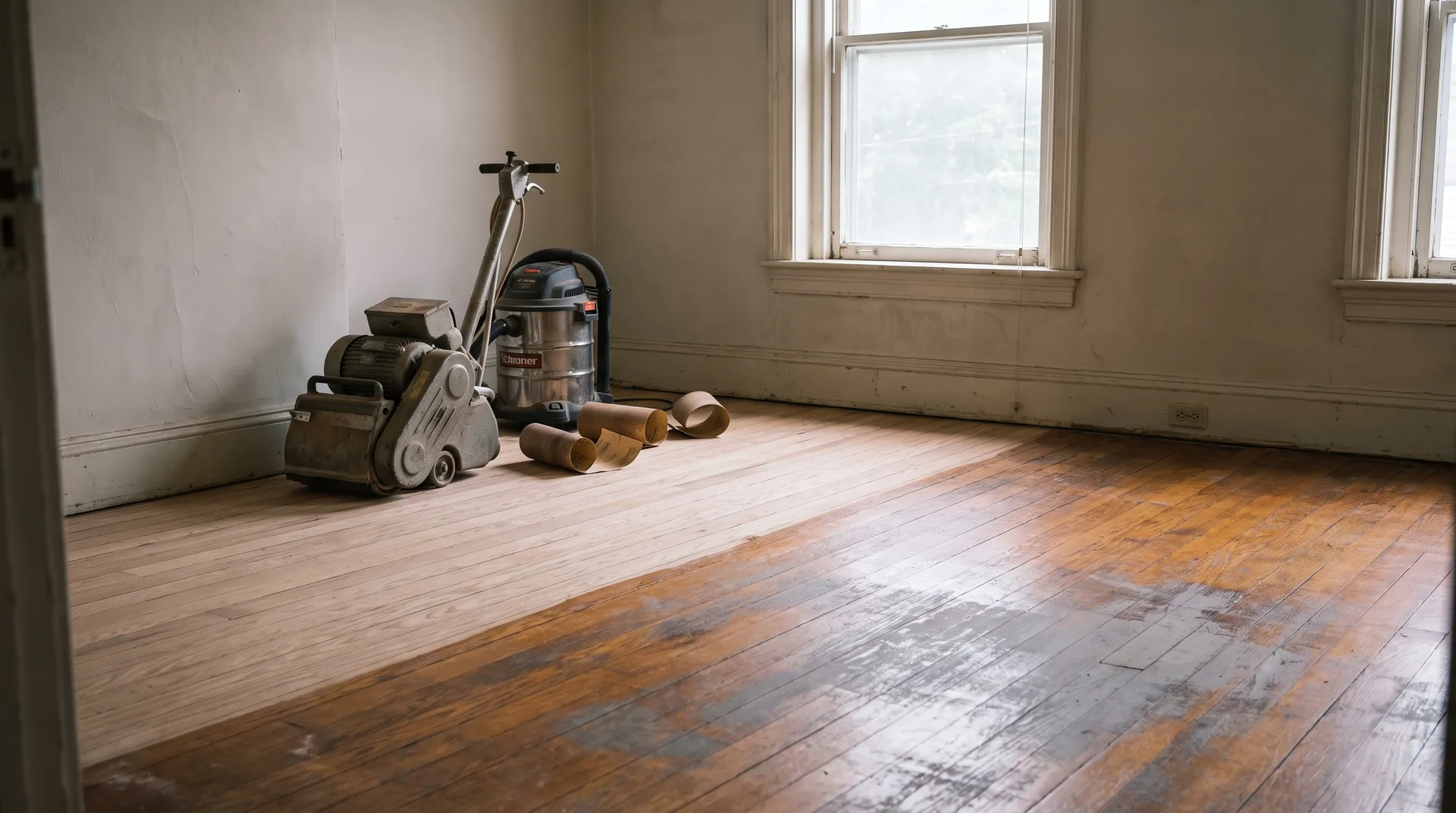
The usual rental setup is a drum or belt sander for the open floor, an edger for the edges along the walls, and a buffer with a sanding screen to blend the two. You'll also need sandpaper in several grits (often 36 or 40, then 60, then 80 or 100), a shop vacuum, a hand scraper for corners, finish applicators, and a respirator. Most rental stores charge by the day, so plan the job so you're not paying for a sander that sits idle while stain dries.
Before you sand, everything has to come out of the room. Pull the shoe molding, set any nail heads below the surface, and look for staples or old carpet tack strips. A single nail sticking up will tear sandpaper and can gouge the drum. Older central Pennsylvania homes often have face-nailed plank floors or strip oak that has been sanded before, so take a close look before the machine goes down.
Is it worth refinishing hardwood floors yourself?
DIY makes the most sense for one or two plain rooms of oak with no deep damage, when you have time to practice. Once you have several connected rooms, stairs, pet stains, or soft woods like pine or maple, hiring someone usually comes out ahead.
The savings are real, but so is what you put in. You'll spend several long, physical days, pay rental and supply costs, and live with a closed-off room. The biggest risk is that sanding mistakes can't be erased with more finish. Fixing dips or chatter marks means sanding again, and that uses up wood the floor can't get back.
A pro crew does the same steps with heavier equipment and years of feel for the machine. Dust is a big difference too: rental sanders have small bags, and fine dust can end up all over the house. Charlie's Sanding & Refinishing is a hardwood floor company in McAlisterville, PA. We sand, refinish, stain, repair, and install hardwood across central Pennsylvania, including the State College and Harrisburg areas. We use a vacuum system that captures up to 99% of the dust. Whichever way you go, the answer depends on the floor more than on how handy you are.
How do I know if my hardwood floor can be sanded again?
Check how much wood sits above the tongue of the boards. Solid 3/4-inch hardwood can usually be sanded several times over its life. Engineered flooring can only be sanded if the top wear layer is thick enough, and thin wear layers often can't be sanded at all.
The easiest place to look is a floor register. Lift the vent cover and look at the edge of a board. If the top layer above the tongue looks thin, or you can see nail heads or the tongue showing through the surface anywhere in the room, the floor may have one light sanding left or none. Floors in older homes that have been refinished several times are the most likely to be thin.
Also look for damage that sanding won't fix. Dark pet stains in oak often go deep into the grain. Cupped or crowned boards point to a moisture problem that should be solved first. Loose, split, or water-damaged boards need repair or replacement before a refinish will look right.
Do I need to sand to bare wood, or will a clean and recoat work?
If the finish is dull and lightly scratched but the scratches haven't gone through to the wood, and the wood hasn't turned gray, you probably don't need a full sand. A clean and recoat (also called a screen and recoat) scuffs the existing finish and adds a fresh coat. It takes about a day instead of several.
It's also the more forgiving job for a homeowner. You aren't cutting into the wood, so there's little risk of gouges. Floors that get a recoat every few years, before the finish wears through, can often go much longer between full refinishes.
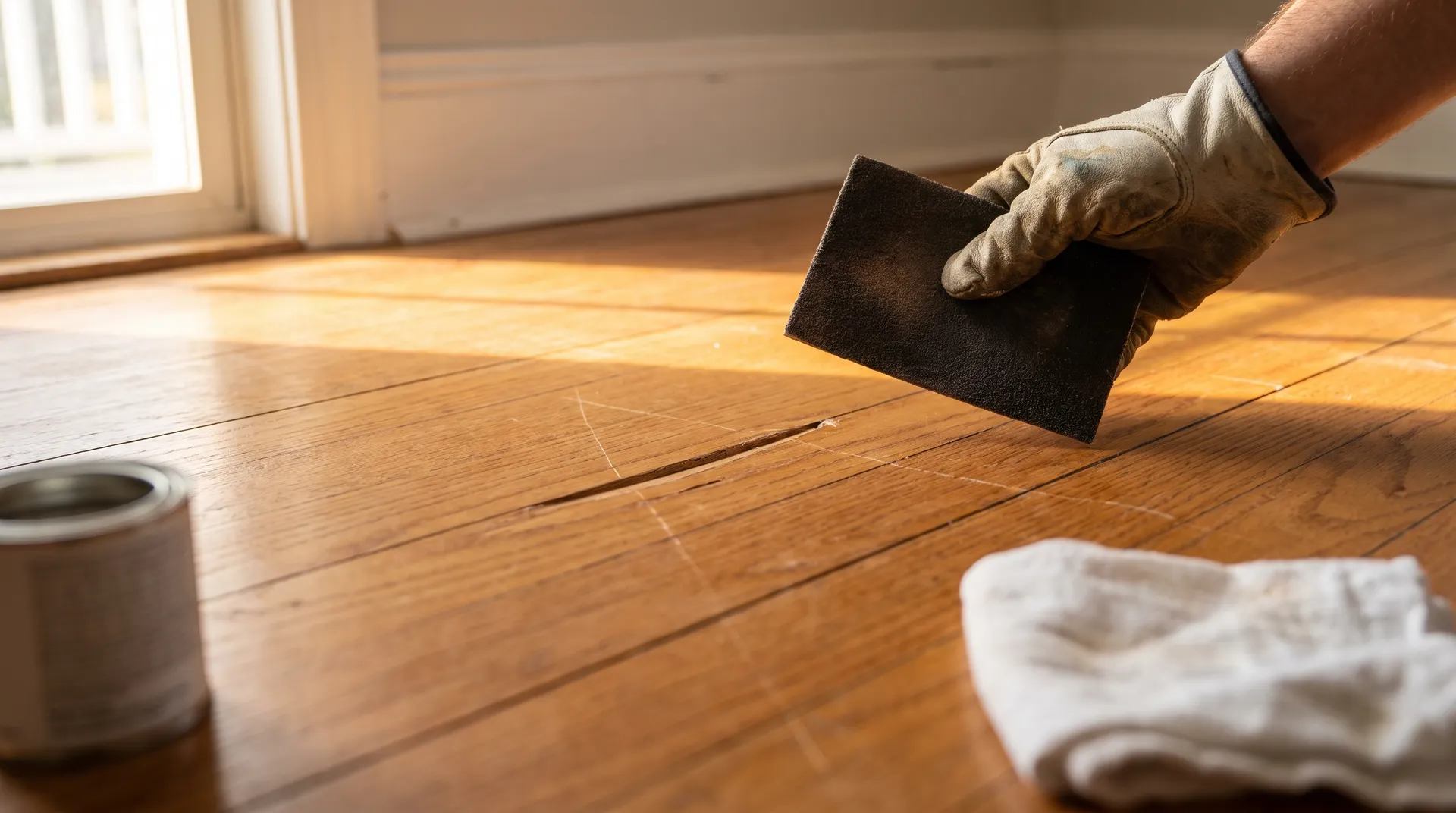
There are limits. A recoat won't change the color, remove deep scratches, or fix bare worn areas in walkways. It may not stick to floors that have been treated with wax or some polish products. Before you recoat, try a small spot somewhere out of sight, like a closet, and check that the new finish bonds once it dries.
How long does it take to refinish hardwood floors yourself?
For a first-timer doing a typical room or two, plan on three to five days, plus more time before furniture and rugs go back. Sanding usually takes one to two days, stain needs a day to dry, and the finish coats take another one to three days depending on the product.
Water-based finishes usually dry enough to recoat in two to four hours, so you can often put down several coats in one day. They stay clear and have less odor. Oil-based finishes warm up the wood with an amber tone, but they usually need eight hours to overnight between coats and smell much stronger. As a typical range, you can walk on the floor in socks after about a day. Furniture can go back after two to four days. Rugs should wait two weeks or more while the finish fully cures, and oil-based finish often needs closer to a month. Follow the label on whatever product you use.
Weather in central Pennsylvania matters. In fall and winter the heat is on, the air gets dry, and gaps between boards open up. That's normal, and it's no reason to put the job off. Keep the house at a steady temperature, in the 60s or low 70s, while the finish cures, since cold slows drying. With the windows closed for the season, oil-based fumes are harder to air out, which is one reason many people pick water-based in colder months. Humid summer weather can slow drying times too.
What are the most common DIY floor refinishing mistakes?
The mistakes that cause the most trouble are letting the drum sander sit in one spot, skipping sandpaper grits, and leaving edger swirls along the walls. All of them show up clearly once stain or finish goes on.
Keep the drum sander moving whenever the drum is touching the floor. Sand with the grain, and lift the drum before you stop or turn around. Go through each grit in order. Jumping from coarse to fine leaves scratches that the fine paper can't remove. Blend the edges and the field with a buffer and screen before you stain, and look across the floor with a light held low to spot marks.
On the finishing side, the common problems are dust stuck in the finish, bubbles from shaking the can or working the finish too much, lap marks from letting edges dry, and blotchy stain on woods like maple, birch, and pine. Vacuum and wipe the floor carefully between coats, stir the finish instead of shaking it, and try your stain on a sanded spot in a closet before doing the whole room. If the house was built before 1978 and the floor has paint on it anywhere, test for lead before you sand, and follow lead-safe practices if the test comes back positive.
Questions we hear
Can you install hardwood flooring yourself?
Yes, especially floating or click-together engineered floors, which are the most DIY-friendly. Nail-down solid hardwood is harder. It needs a flooring nailer, a moisture check of the subfloor, time for the wood to adjust to the house, and a straight first row, because every row after it follows that line. Stairs, transitions, and tying new boards into an existing floor are where most DIY installs run into trouble.
Can you put new flooring over old hardwood?
Often you can, if the old hardwood is flat, solid, and dry. Floating floors like LVP or engineered planks can go right over it, and new hardwood can be nailed over old boards running the other direction. Check the added height at doorways, thresholds, and under appliances first. Also consider whether the old floor could just be refinished, because that's usually the simpler job.
Can you use dish soap like Fairy liquid to clean wooden floors?
A few drops in a bucket of water once in a while won't ruin a sealed floor. Used regularly, though, dish soap leaves a film that dulls the finish and holds dirt. A pH-neutral cleaner made for finished hardwood and a damp mop, not a wet one, is the safer routine. Avoid steam mops and oil soaps on polyurethane finishes.
What are the disadvantages of staining wood floors?
Staining adds a step and usually an extra day of drying, and it locks in a color that's hard to change later without sanding again. Some woods, like maple, birch, and pine, tend to stain blotchy. Very dark colors show dust, pet hair, and scratches more than natural or lighter tones. Stained floors can also be harder to touch up so the repair blends in.
Should I use water-based or oil-based polyurethane on my floors?
Water-based finish dries clear, keeps oak and lighter woods looking natural, has less odor, and lets you do more than one coat a day. Oil-based finish gives the wood a warm amber glow that deepens over time, but it takes longer to dry and cure and has stronger fumes. Both can hold up well when applied correctly, so the choice mostly comes down to the look you want and how soon you need the room back.
Can I refinish hardwood floors without sanding?
You can refresh them without sanding to bare wood. A clean and recoat lightly scuffs the existing finish and adds a new top coat, which brings back the shine on a floor that's dull but not worn through. Chemical abrasion kits do something similar. Neither one fixes deep scratches, gray worn spots, or a color you don't like, because those need a full sand.