Can you live in your house while hardwood floors are refinished?
You can usually stay home during a refinish if the finish is water-based and the house layout lets you get around the work. What decides it is the type of finish, which rooms are being done, and whether you can reach a bathroom, a bedroom, and an exit without walking on fresh finish.
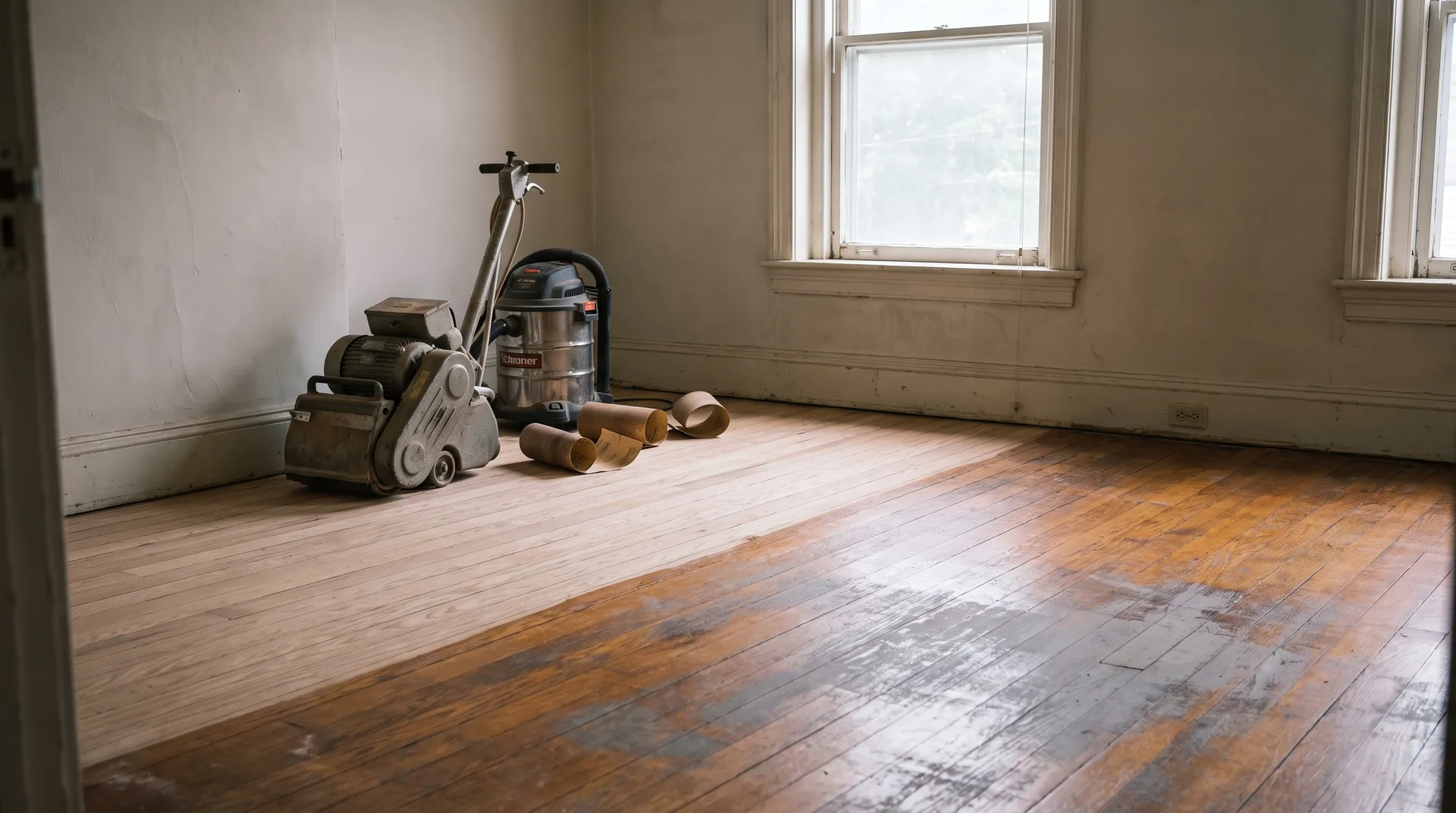
A refinish happens in stages. First comes sanding, which is loud and takes a day or two for an average set of rooms. Then the floor is cleaned and stained if you've chosen a color. After that come the coats of finish, usually three. Sanding is noisy, but you can live with it. The finish coats are where things get tight, because nobody can walk on a coat while it dries.
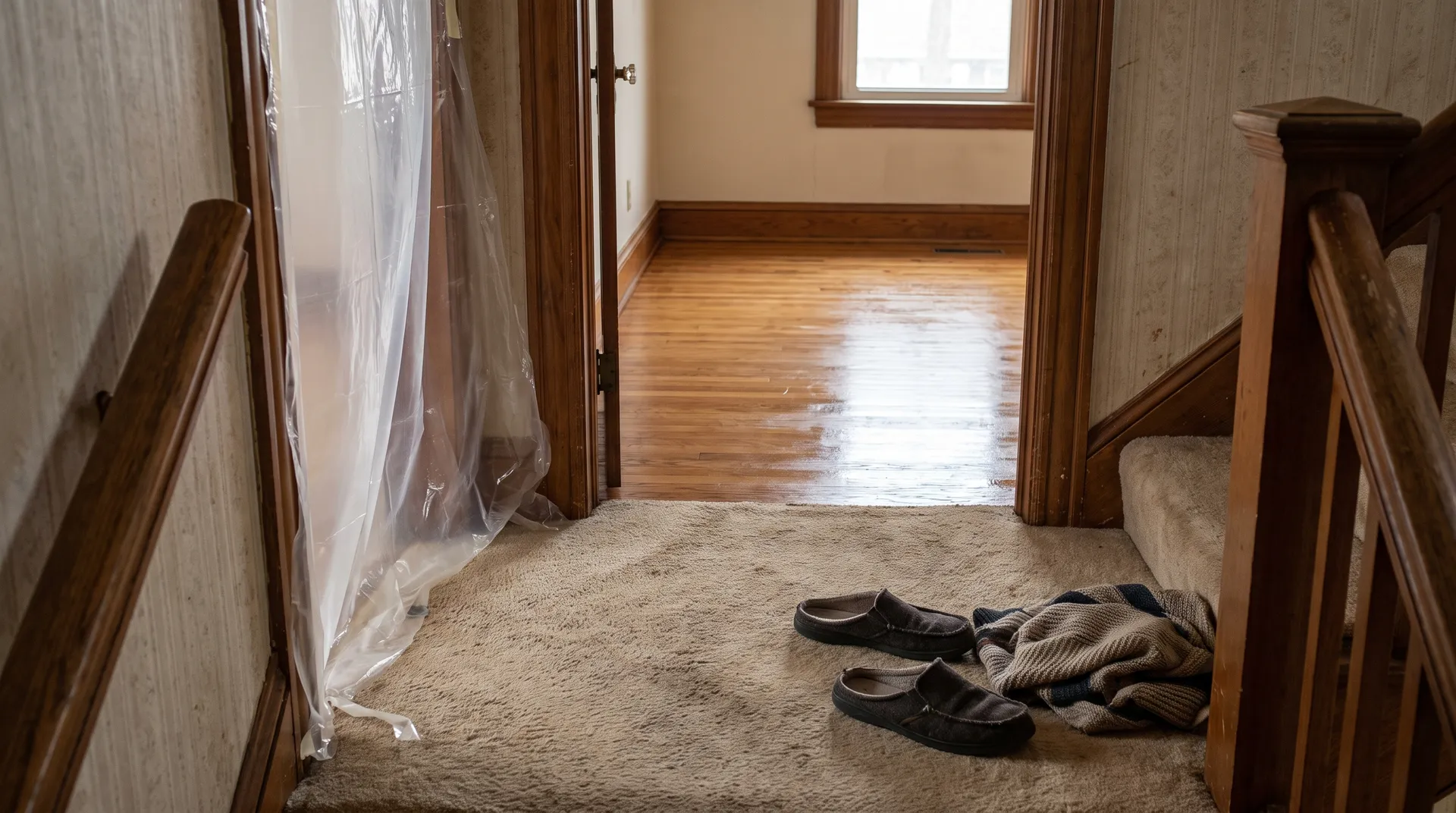
If the work only covers a living room and dining room and the bedrooms, bathroom, and a side door are still reachable, staying home is usually workable. If the job covers the only hallway to the bedrooms, the stairs, or the kitchen, you'll either need a place to stay for a few nights or a plan to do the house in sections.
How long do you have to stay off refinished hardwood floors?
With water-based finish, you can usually walk on the floor in socks within about 24 hours of the last coat, put furniture back after two to four days, and put rugs down after about two weeks. Oil-based finish takes longer: about a day or two before light foot traffic, around a week before furniture, and up to a month before rugs.
Those are typical ranges, not fixed rules. Temperature, humidity, airflow, and how heavy the coats are all change drying time. Finish feels dry well before it's fully cured, and until it cures it dents and scuffs more easily. That's why the wait for rugs is so much longer than the wait for walking.
For the first week or so, put felt pads on every furniture leg, lift furniture instead of sliding it, and skip wet mopping. A dry microfiber mop or a vacuum without a beater bar is all the floor needs at first.
If you're staining, plan on extra time. Stain has to dry before the first coat of finish goes on, which usually adds anywhere from a few hours to a full day depending on the stain and the weather.
Water-based vs. oil-based finish: which is easier to live with?
Water-based finish is easier to live around. It has much less odor, each coat dries in a few hours, and a whole finish can often go on in a day or two. Oil-based finish has a strong solvent smell that spreads through the house, and each coat needs about a day to dry, so the job takes longer and most people leave while it's going on.
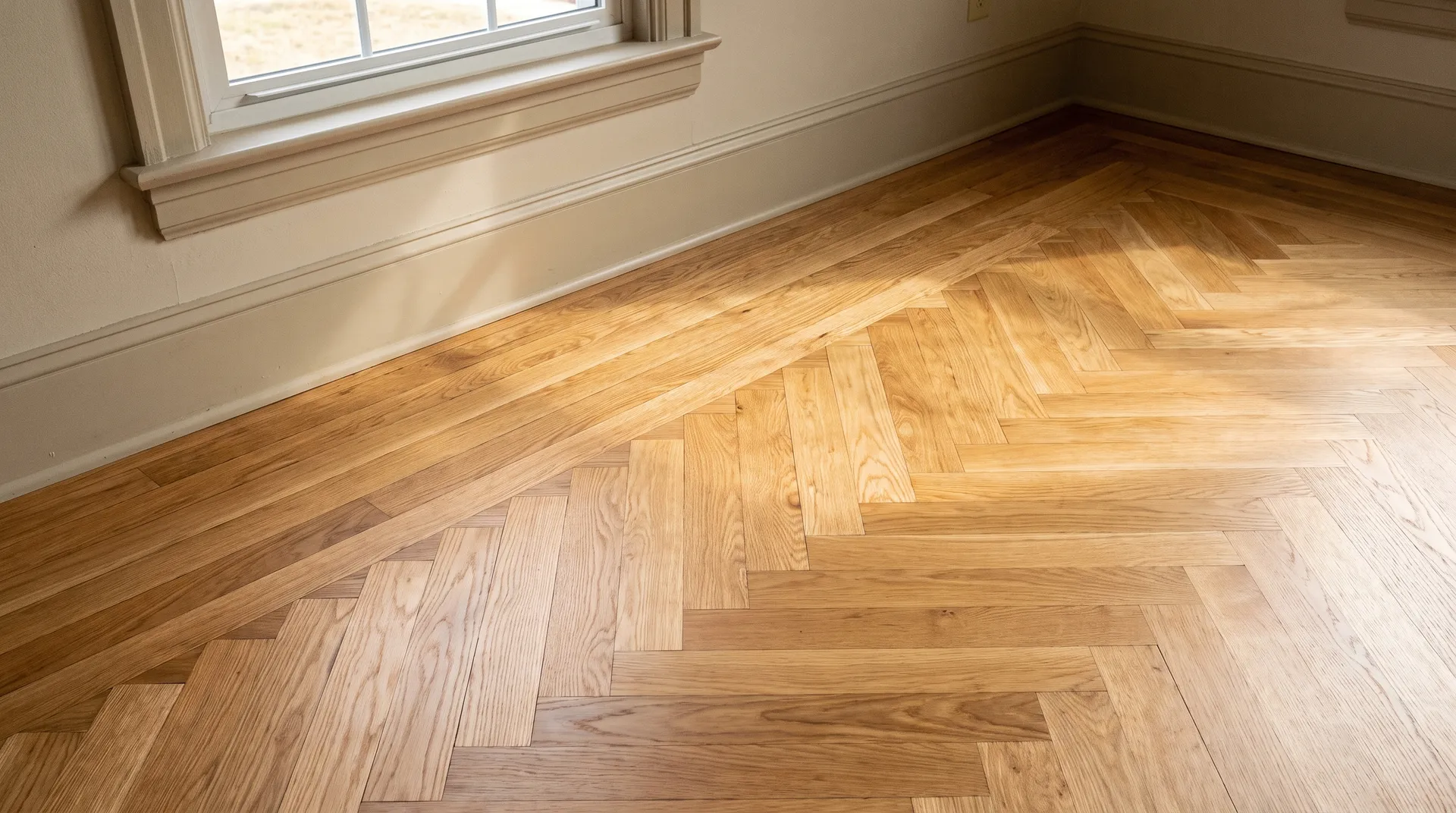
Your schedule isn't the only thing that should decide it. Oil-based finish gives wood a warm amber tone that deepens over the years, which many people want on older oak floors, and it has a long track record. Water-based finish stays clearer and yellows less, which suits lighter or gray-toned floors and keeps a stain color closer to what you picked. Both make durable floors when they go on right.
We use both water-based and oil-based finishes, chosen for the look you want, how the house is lived in, and the character of the wood. If you need to stay home, tell your floor contractor at the start, because it may decide the finish.
Is refinishing dusty and loud?
Sanding is loud. The big drum or belt sander runs most of the day, and edgers are louder still. How much dust gets into the rest of the house depends mostly on the dust collection. A good containment system catches most of it, while older setups with a bag on the sander leave a fine layer on everything.
If you're staying home during sanding, plan to be in another part of the house or out for the day, especially if anyone is working from home or a baby needs to nap. Close interior doors, and cover anything in nearby rooms you don't want dusty.
Charlie's Sanding & Refinishing is a hardwood floor company in McAlisterville that sands, refinishes, stains, and recoats floors and staircases in central Pennsylvania, from the State College area to the Harrisburg area. We use a professional vacuum system that captures up to 99% of the dust, so the house stays livable while the sanding is going on.
Refinishing floors in fall and winter in central Pennsylvania
You can refinish floors in fall and winter here. Cold weather just changes how you live around the job. Finish needs steady room temperature, roughly in the mid-60s to mid-70s, to dry and cure the way it should, so the heat has to stay on even if you're away.
In October and November, mornings in the valleys around Lewistown, Mifflintown, and State College can be cold, and once the furnace is running, nobody wants to open the windows. Water-based finish doesn't need much airing out, which is one reason it's popular this time of year. Oil-based finish needs ventilation to clear the smell, which is harder with the windows shut, and that's another reason people with oil-based jobs tend to stay elsewhere.
Forced-air systems can blow dust onto wet finish, so the HVAC is often turned down or the vents in the work area are covered while coats are going on, then turned back on once the coat has set. Indoor air also gets drier once the heat starts. Dry air speeds up drying a little, but it can also open small gaps between boards in older homes. That's normal seasonal movement, not a problem with the refinish.
If you want the floors done before Thanksgiving or the holidays, count back from the date. Leave time for the floor to dry and get furniture back in place, plus a little extra in case the weather slows things down.
Planning around kitchens, bathrooms, stairs, and pets
The rooms that make staying home hard are the ones you can't do without: the kitchen, the only full bathroom, and the stairs to the bedrooms. Plan for those first and the rest usually falls into place.
If the kitchen floor is included, appliances come out and you won't be cooking there for a few days. Stock up on food that doesn't need the stove, or set up a microwave and coffee maker in another room. If the floor runs into a bathroom, the toilet may need to come up, so make sure you have another one you can use. We move the furniture and appliances, and take up toilets and trim when needed, so you don't have to clear the rooms yourself.
In a lot of older two-story homes in the area, one staircase is the only way upstairs. If the stairs are part of the job, you can do them at a separate time, or finish every other tread first and then the rest the next day so there's always a way up and down.
Pets are the hardest part. Dog nails will mark fresh finish, and pets have no idea which floor is wet. Most people board them, leave them with family, or keep them in a closed-off room for at least the first few days, and longer with oil-based finish. Putting rugs or runners along the paths pets use most helps protect the floor once they're back, but wait until the finish has cured.
Questions we hear
Can I refinish a hardwood floor myself?
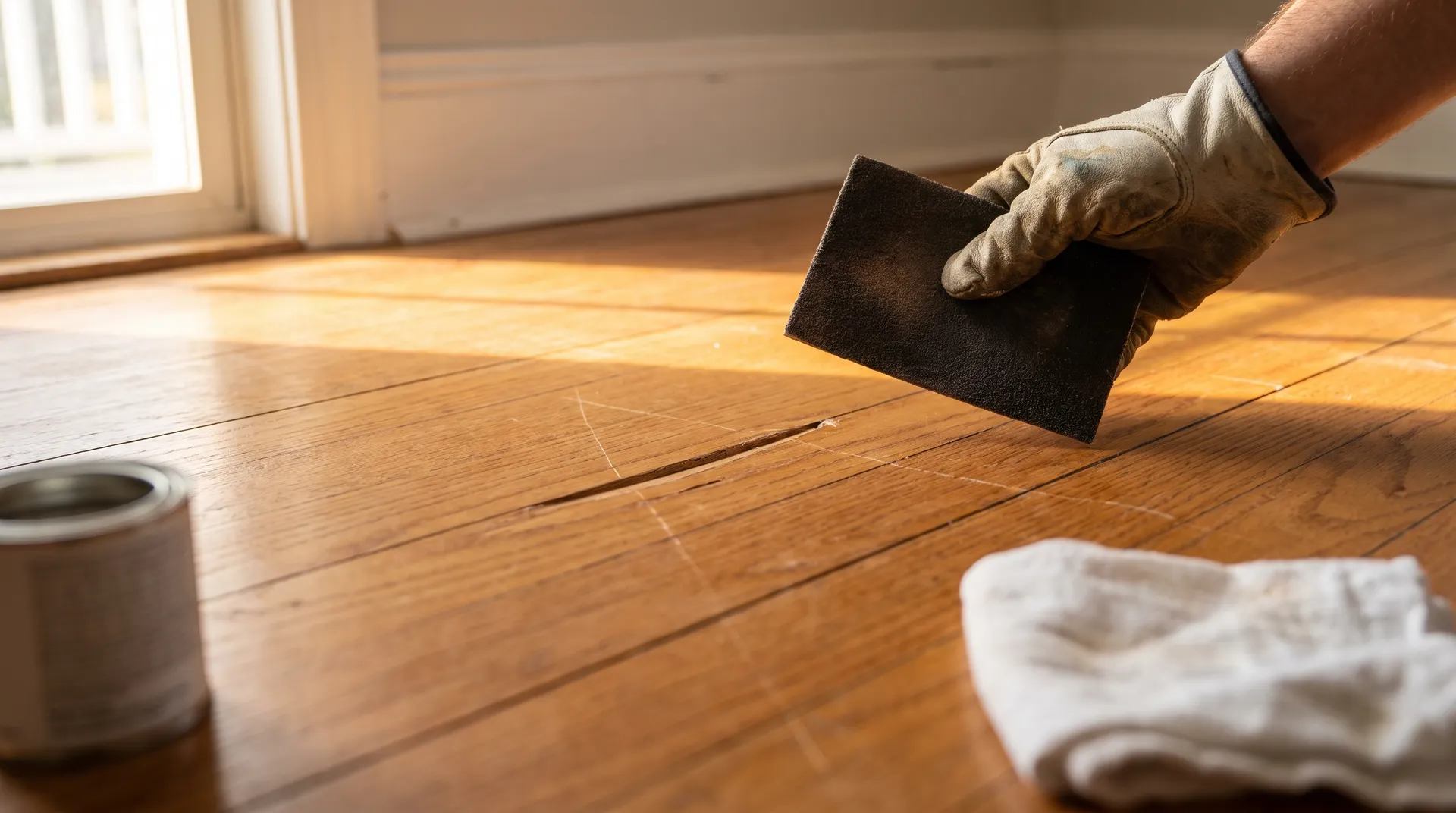
You can, but a full sand and refinish is hard to do well the first time. Rental drum sanders can gouge the floor in seconds if they stop in one place, and solid hardwood can only be sanded so many times before the wear layer is gone. A light buff and recoat on a floor that's just dull is a much easier DIY job than sanding down to bare wood.
How long before you can walk on refinished or painted stairs?
Stairs follow the same drying times as floors. With water-based finish, that's about 24 hours before careful foot traffic, and with oil-based, a day or two. Painted stairs are usually dry to the touch in an hour or two but need about a day before you walk on them, and a few weeks before the paint is fully hard. Doing every other step lets you keep using the stairs while the rest dry.
What are the disadvantages of staining wood floors?
Stain adds drying time before the finish can go on, so the job takes longer. Some woods, like maple and birch, can blotch when stained dark. Scratches show more on very dark or very light floors, and if you get tired of the color, the only way to change it is to sand the floor again.
Can you use dish soap like Fairy liquid to clean wood floors?
A drop of mild dish soap in a bucket of water won't hurt a sealed floor now and then, but it can leave a dull film over time. A pH-neutral hardwood floor cleaner and a damp, not wet, microfiber mop are safer for everyday cleaning. On a freshly refinished floor, wait until the finish has cured before any wet cleaning.
Is it safe to sleep in the house after floors are refinished?
With water-based finish, most people sleep at home without any trouble, as long as they keep the bedroom door closed and run some fresh air through the house when they can. With oil-based finish, the fumes are strongest for the first couple of days, so it's better to sleep somewhere else during that time, especially for children, pregnant women, pets, and anyone with asthma.