How do you tell how deep a hardwood floor scratch is?
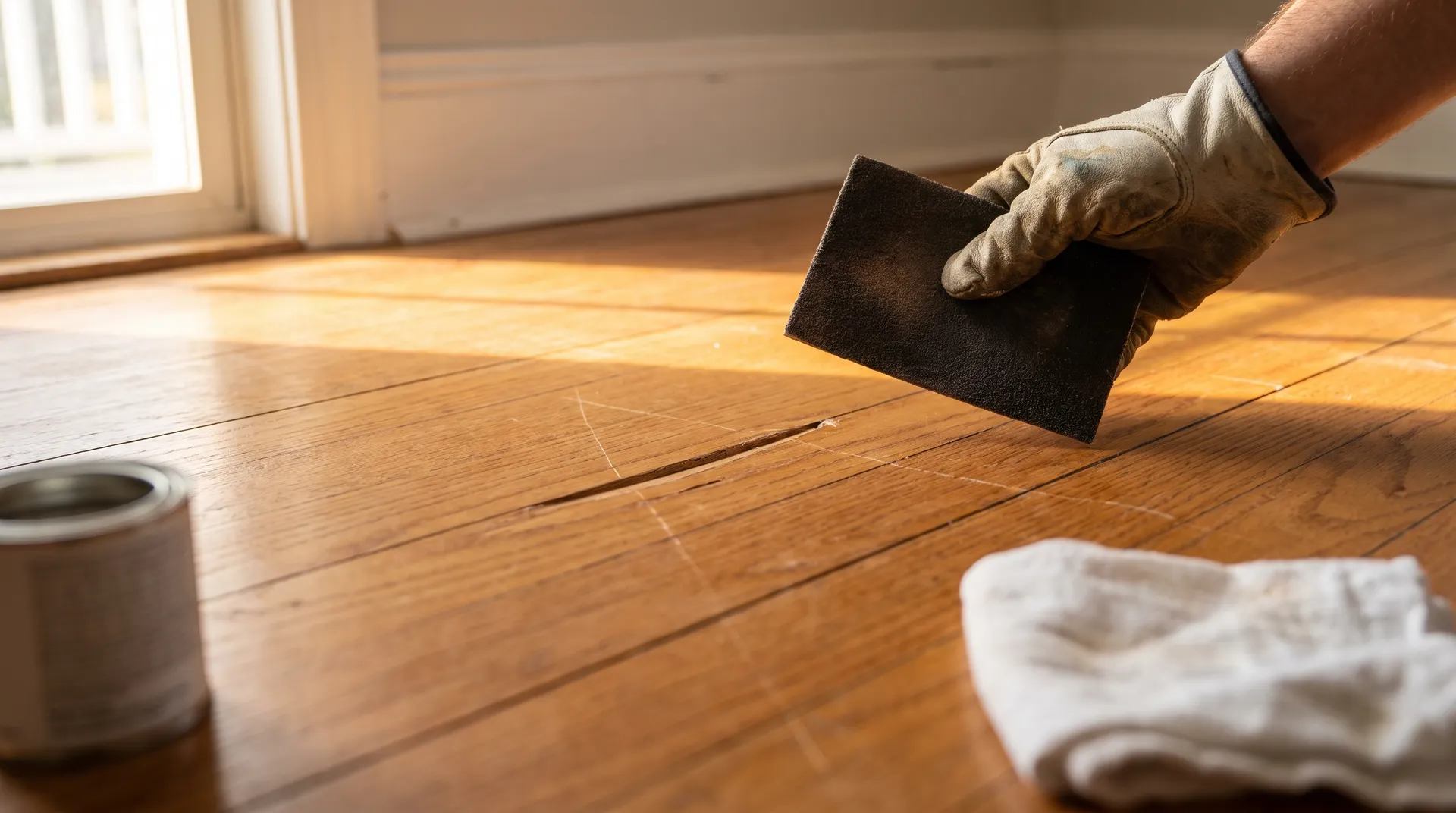
Run a fingernail across the scratch and look at its color. If your nail slides over it and the mark looks white or gray, the scratch is only in the finish. If your nail catches and you can see light, raw-looking wood, it has gone through the finish and into the wood.
A finish scratch is the clear coat on top getting scuffed. The wood underneath is fine, so the fix is about the coating. A wood scratch has cut through that coating, so the bare wood is open to dirt and moisture and will often darken over time if it's left alone.
Gouges and dents are a third kind. A chair leg dragged across the room, a dropped cast iron pan or a dog's claws on a turn can crush or tear the wood fibers. Look closely in good side light, and check whether the damage is in one spot or spread across a whole room. That decides most of what comes next.
How to fix light scratches in the finish
Most light finish scratches can be helped at home. Clean the area well, then use a touch-up product made for your type of finish. Many scuffs that look like scratches are really dirt or rubber marks sitting on top, and they come off with a damp, well-wrung cloth and a pH-neutral hardwood cleaner.
For true hairline scratches in the finish, a small amount of matching finish dabbed on with a fine brush can fill the line and make it hard to see. Sheen matters here. Satin, semi-gloss and gloss all reflect light differently, and a touch-up in the wrong sheen will stand out more than the scratch did.
Skip the polishes and "restorers" sold at the grocery store. Many of them leave a silicone or acrylic film that hides scratches for a few weeks, then builds up and dulls. That film also keeps a new coat of finish from bonding later, so it can rule out a simple recoat and push you toward a full sanding.
How to fix scratches that go into the wood
For a few scratches into the wood, a stain marker or a color-matched wax fill stick is the usual fix. Use the marker to color the exposed wood, then fill the groove with the wax stick and buff it level. Done carefully, it blends well from standing height.
The trade-off is that touch-ups are patches. They don't add any real protection, wax fills can wear out of high-traffic spots, and getting the color right takes some trial and error, especially on older oak that has turned amber with age. Try your colors in a closet or under where a couch sits before you work in the middle of the room.
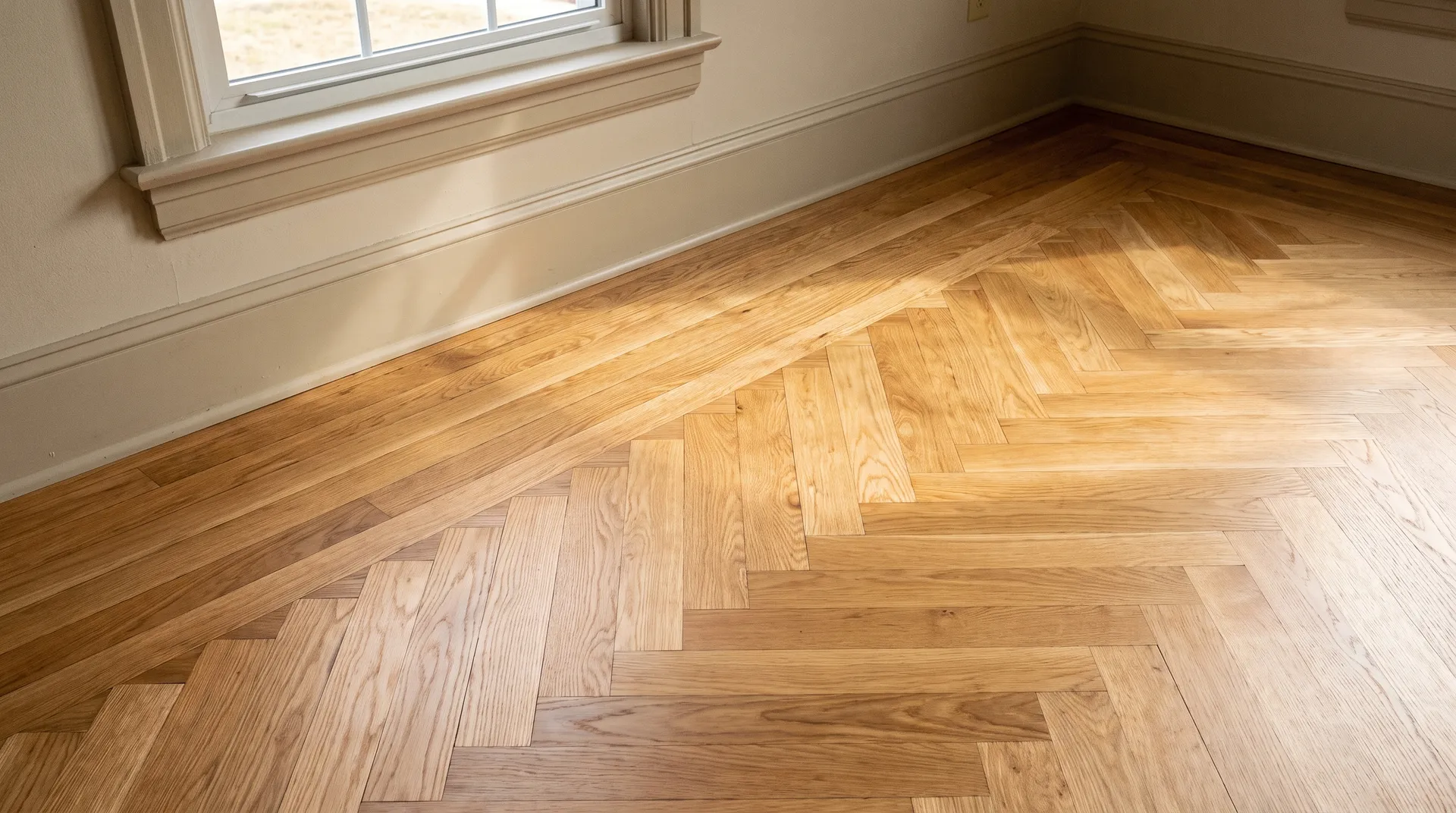
Deep gouges, pet damage, water-stained boards and cracked boards usually call for board replacement. The damaged boards get cut out and new ones are woven in so the joints stagger like the rest of the floor. Then the repair is sanded and finished to blend. Many homes in central Pennsylvania have older red or white oak in widths that aren't standard anymore. Matching species, width and color is what makes a repair disappear instead of looking like a patch. This is the kind of work we do at Charlie's Sanding & Refinishing, a hardwood floor company based in McAlisterville, PA, that repairs, refinishes, recoats and installs hardwood floors in towns from State College to Harrisburg.
Can a clean and recoat fix scratches?
A clean and recoat hides scratches that are only in the finish, but it won't remove scratches that cut into the wood. The existing finish is deep cleaned, lightly abraded so a new coat will stick, and then covered with a fresh coat of finish. That fills in fine surface scratches and brings back an even sheen.
It works well on floors that look dull, scuffed or worn in traffic paths but still have finish over the whole floor. Busy homes with kids or pets often recoat every three to five years to keep the wood itself from ever getting worn. A clean and recoat is much faster and less disruptive than sanding to bare wood, and it doesn't take any wood off the floor.
It isn't the right fix when scratches show bare wood, when the finish is worn through to gray wood in spots, or when the floor has years of polish or wax buildup. Many older homes also still have original wax or shellac finishes, and modern finishes won't bond over those. In those cases, the floor needs a full sanding to start over.
When does a scratched floor need a full refinish?
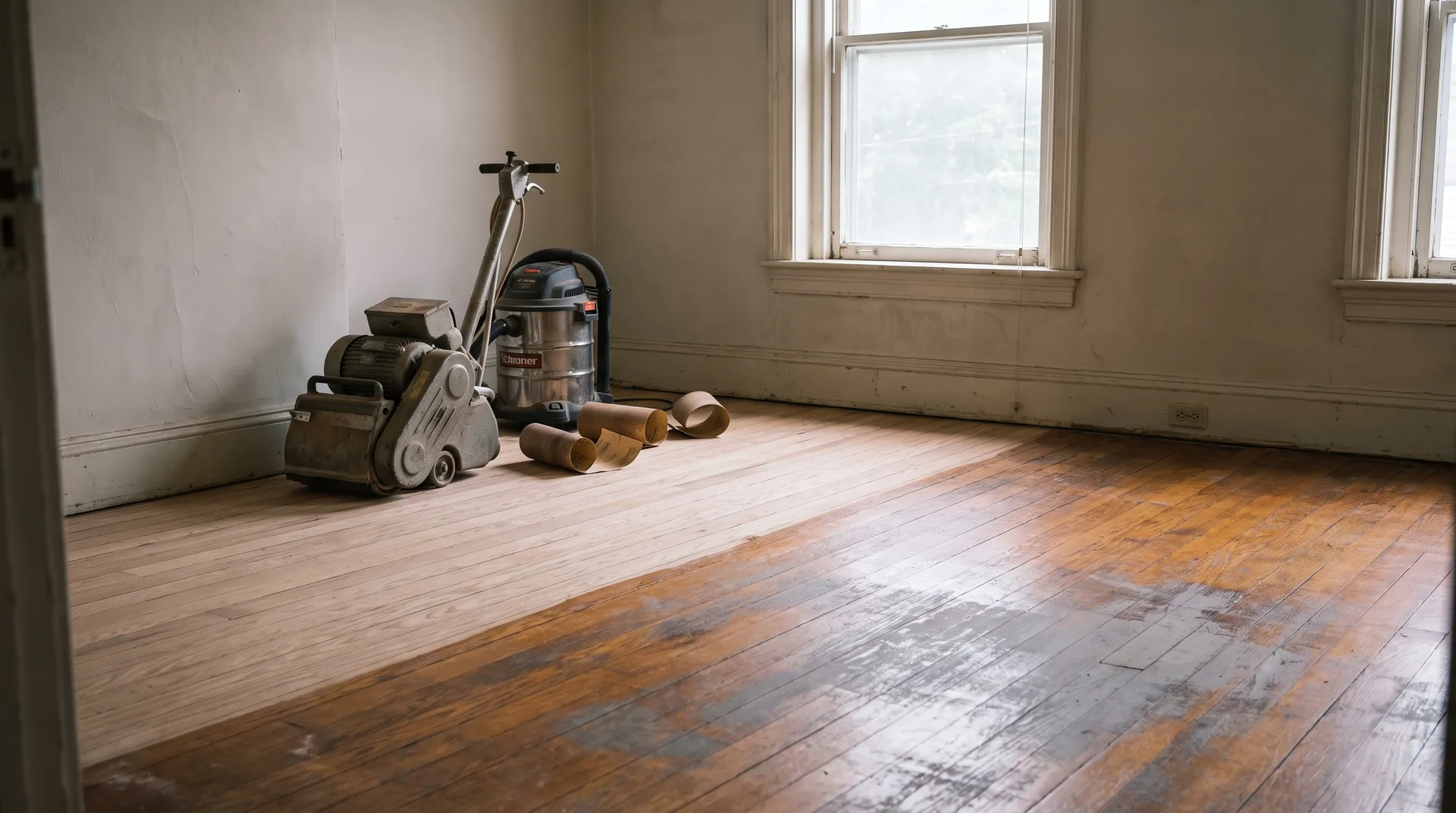
A full sand and refinish makes sense when scratches into the wood are spread across most of the floor, when the finish is worn through in large areas, or when you also want to change the color. Sanding takes the floor down to fresh wood, which removes the scratches instead of covering them.
Solid three-quarter-inch hardwood can be sanded several times over its life. Engineered hardwood only has a thin top layer of real wood, so some engineered floors can be sanded once or twice and some not at all. Check what you have before planning on a sanding.
People often ask whether they can refinish a hardwood floor themselves. Rental drum sanders can do it, but they're unforgiving. Stopping in one spot for a second digs a dip, uneven passes leave chatter marks you'll see once finish goes on, and edging along the walls takes practice. On engineered floors, it's easy to sand through the wear layer, and that can't be undone. For one room of solid oak and a patient owner, DIY is possible. For a whole first floor, the risk of damage that can't be fixed goes up.
A typical refinish of a few rooms takes several days from sanding to final coat, depending on the finish. Water-based finishes dry faster between coats. Oil-based finishes take longer and give off more odor. Either way, plan on light foot traffic within a day or so of the last coat, furniture a few days after that, and area rugs only once the finish has cured. That's about a week for many water-based products and up to a month for oil-based.
Preventing hardwood scratches through a central Pennsylvania winter
Most scratches come from grit, furniture and pets, and winter here makes the grit problem worse. Road salt and anti-skid cinders track in on boots and act like sandpaper on a finish, so mats inside and outside every entry door make a real difference from November to March.
Put felt pads on every chair and table leg and replace them when they get packed with dirt. Lift furniture instead of dragging it. Keep pets' nails trimmed. Vacuum with the beater bar turned off, or use a soft floor head, and damp mop with a hardwood cleaner rather than a soaking wet mop or a steam mop.
Heating season also dries the air out, and wood shrinks as it loses moisture. That's when gaps open between boards and the edges can get more brittle. Keeping indoor humidity somewhere around 35 to 55 percent with a humidifier helps the floor stay stable through the winter and swell back evenly in summer.
Questions we hear
Can you use fairy liquid or dish soap to clean wooden floors?
A few drops of mild dish soap in a bucket of warm water won't hurt a sealed hardwood floor now and then, as long as the mop is wrung out well. Used often or too strong, though, it leaves a film that dulls the finish and holds onto dirt. A pH-neutral cleaner made for finished hardwood is the safer choice for regular cleaning, and it won't get in the way of a recoat later.
Can I stay in my house while floors are refinished?
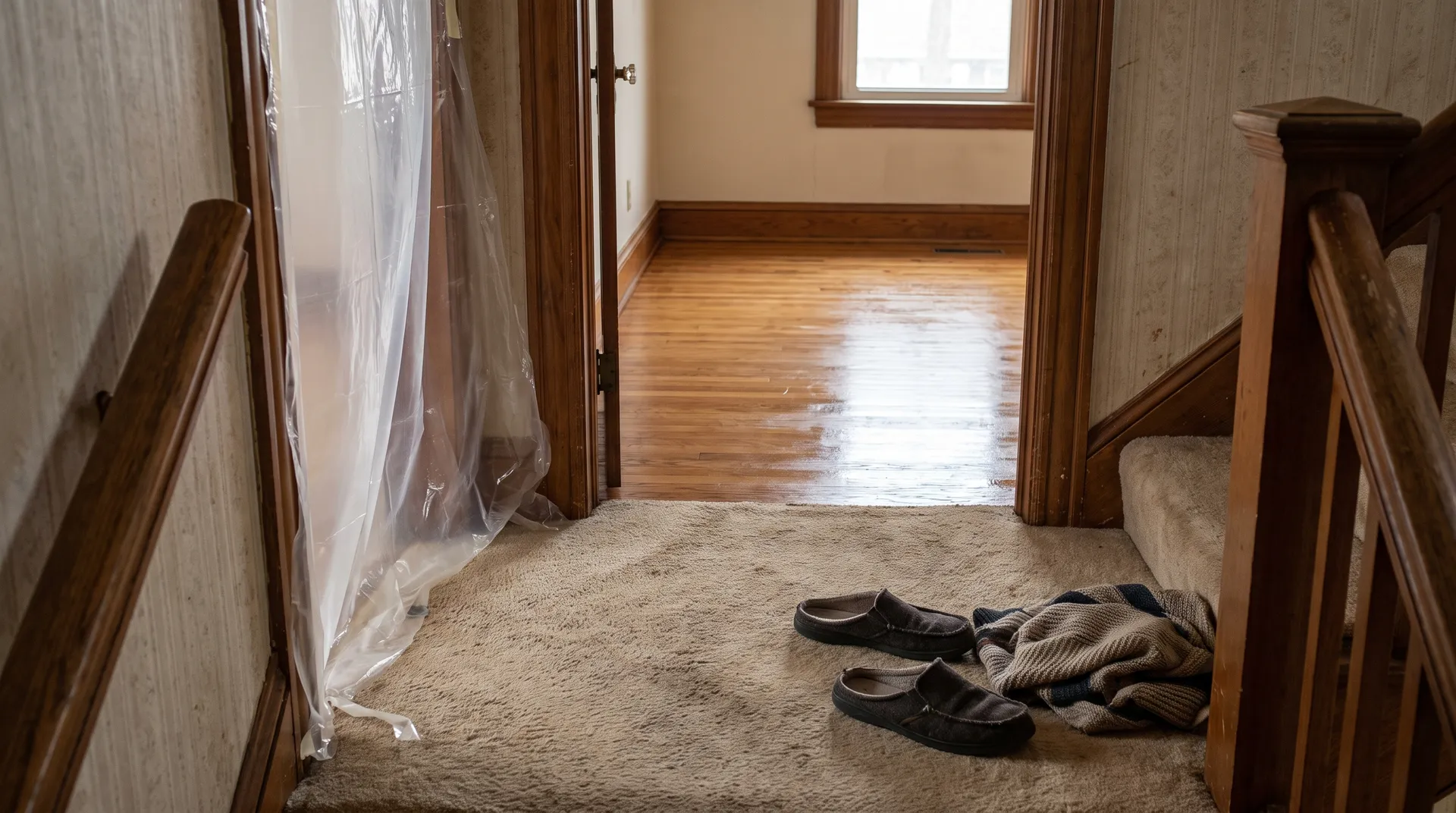
Many people do stay home during a refinish, as long as they can live in the rooms that aren't being worked on and get in and out of the house without crossing wet finish. Water-based finishes have much less odor than oil-based ones, which matters if you have kids, pets or someone sensitive to fumes. Dust is the other concern. We use a professional vacuum system that captures up to 99% of the dust, which keeps the rest of the house livable while the work is going on.
Will a repaired board match the rest of my floor?
It can come very close when the new wood matches the species, the board width and the grain, and when the repair area is sanded and finished to blend in. Older floors have usually aged to a warmer color, so the stain and finish on a repair have to be adjusted to match. Blending new wood with old is part of how we approach every repair, so the repair looks like part of the original floor.
How often should hardwood floors be recoated?
Busy homes with kids or pets often recoat every three to five years, and quieter homes can go longer. A good rule is to recoat when the floor starts to look dull or scuffed in walkways but before the finish wears through to bare wood. If you wait until the wood is exposed, a recoat is no longer enough and the floor needs sanding.
Can you put new flooring over old hardwood?
Yes. Floating floors like LVP can usually go over hardwood that is flat, solid and dry, though door clearances and transitions to other rooms need to be checked. Before covering it, look at whether the hardwood just needs a refinish, since a scratched, dull floor can often be brought back for a lot less disruption than replacing it. If the hardwood is badly damaged or you want something more water resistant in a kitchen or basement, going over it can make sense.