What are the steps in refinishing a hardwood floor?
A full refinish goes in this order: prep the room, sand the floor in stages, clean up every bit of dust, stain if you're changing color, then apply sealer and finish coats. Every step depends on the one before it, so skipping or rushing one usually shows in the final floor.
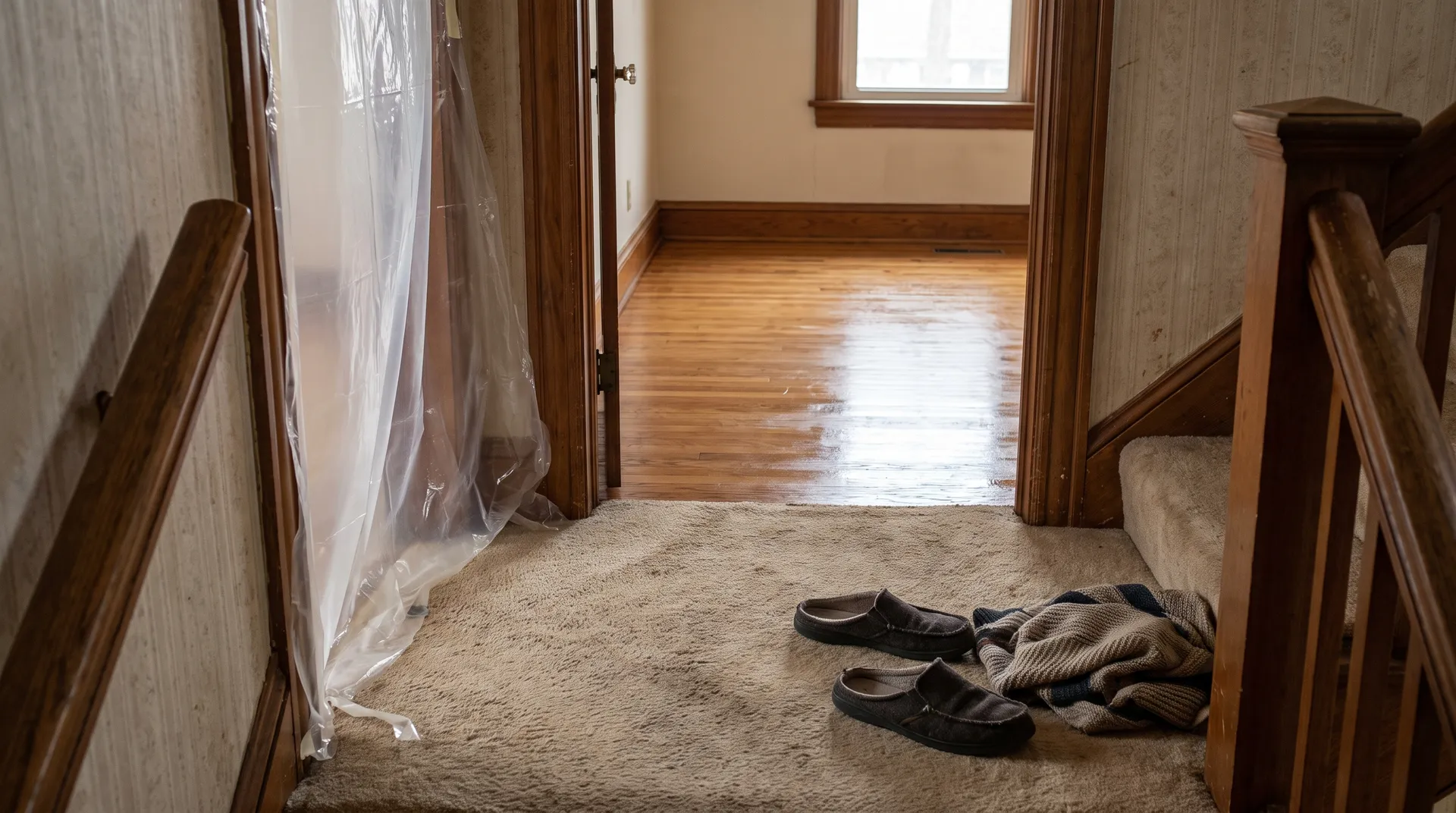
Prep means clearing the room, pulling base shoe or quarter round when it's in the way, and setting any nail heads that stick up so they don't tear the sandpaper. On older floors this is also when loose boards get re-nailed and damaged boards get replaced, so the repairs are sanded flat with the rest of the floor.
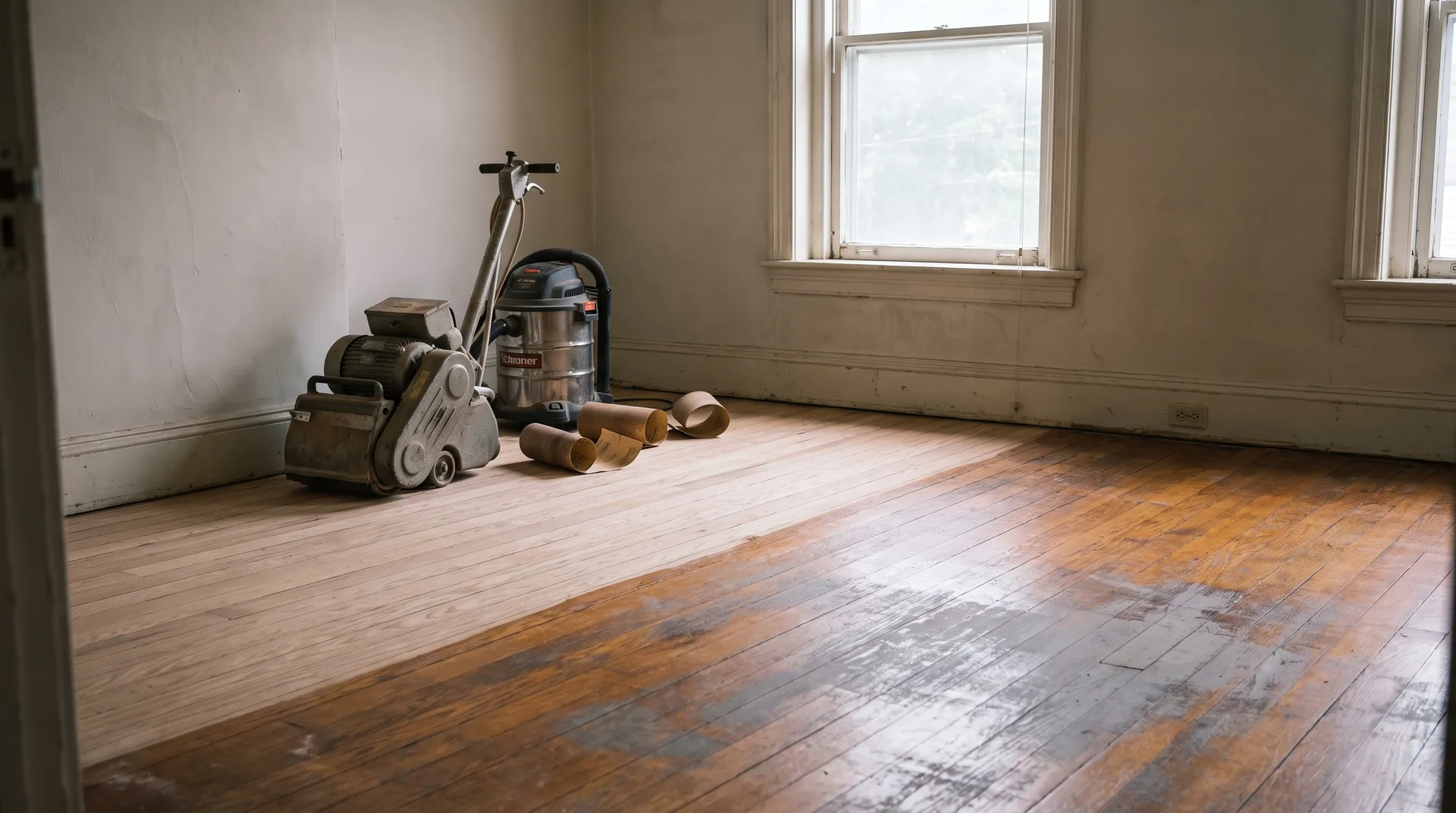
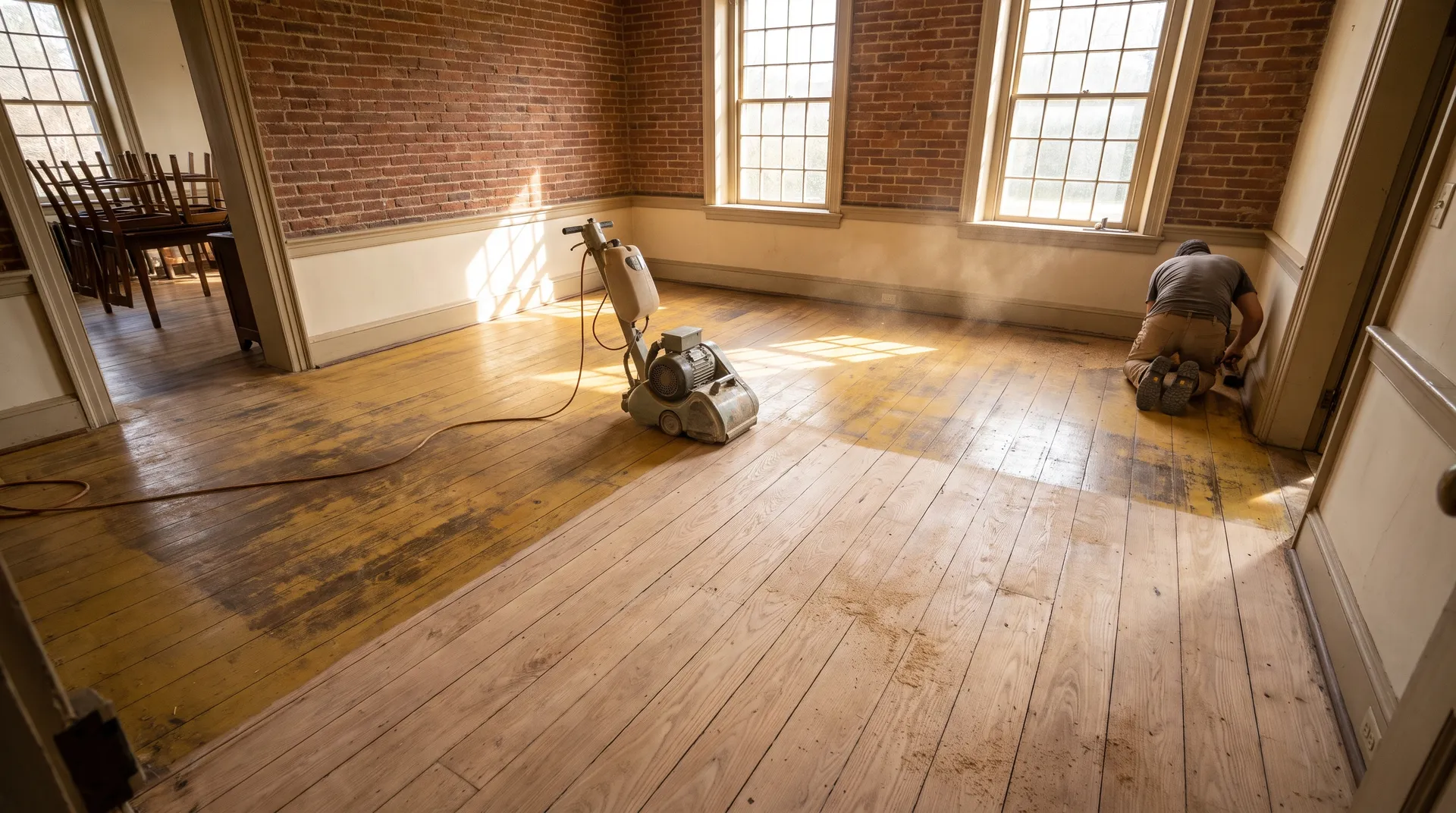
Sanding starts with a coarse grit to cut through the old finish and level the boards. Medium and fine grits follow to take out the scratches the coarse paper left behind. The edges and corners a big sander can't reach are done with an edger and a hand scraper. Many floors also get a final pass with a buffer or multi-disc sander to blend the field and the edges, which matters most when the floor is going to be stained.
After sanding, the floor is vacuumed and tacked to pick up fine dust before any stain or finish goes on. Dust left on the floor ends up sealed into the finish. We're Charlie's Sanding & Refinishing, a hardwood floor company based in McAlisterville, PA, and we sand, stain, and refinish floors and staircases within about 60 miles, including State College and the Harrisburg area. On our jobs we sand with a vacuum system that captures up to 99% of the dust, so most of it never gets into the rest of the house.
How long does refinishing a hardwood floor take?
For one or two average rooms, plan on about three to five days from the first sanding to walking on the floor in socks. A whole first floor can take a week or more. Most of that time is spent waiting for the finish to dry, not sanding.
The type of finish sets the pace. Water-based finishes usually dry in two to four hours between coats, so several coats can go on in one day. Oil-based polyurethane usually needs 8 to 24 hours between coats, so each coat takes most of a day. If you stain first, add another day for the stain to dry, especially in cool weather.
After the last coat, a general guide is: light foot traffic in socks after about 24 hours, furniture back after two to four days (lift it, don't slide it, and use felt pads), and rugs back after two to four weeks. Finishes keep hardening for weeks after they feel dry, and a rug laid down too early can trap solvents and leave a mark.
Refinish, clean and recoat, or replace?
If the finish is dull and lightly scratched but the wood underneath isn't exposed, a clean and recoat is often enough. If the finish is worn through to gray or bare wood, you have deep scratches, or you want a new color, the floor needs a full sand and refinish. Replacement is usually only needed when boards are badly water-damaged, cupped past saving, or sanded too thin.
A clean and recoat means deep cleaning the floor, lightly abrading the existing finish, and putting on a fresh coat. It doesn't remove scratches that go into the wood or change the color. It's faster and less disruptive than a full refinish, and done every few years in high-traffic areas, it can push back the need for a full sanding. It won't bond well over some waxes or over floors that have been treated with polish or cleaners that leave a film, so test the floor first.
Solid 3/4-inch hardwood can usually be fully sanded several times, often four to six over its life, depending on how aggressive earlier sandings were. Engineered hardwood depends on its wear layer: thin wear layers may allow one light sanding or none, and thicker ones can take more. If you can see the tongue or nail heads at the board edges, there may not be enough wood left for another full sanding, and repair or replacement of those areas is worth discussing.
Hardwood floor staining: choosing a color, especially on oak
Stain changes the color of the wood, not its protection, so the finish coats still do the work of protecting the floor. The most reliable way to choose a color is to test two or three samples on your actual sanded floor, because the same stain can look very different on different species and even on different floors of the same species.
Red oak, the most common hardwood in older Pennsylvania homes, has open grain and warm, slightly pinkish undertones. It takes stain evenly and shows a lot of grain pattern. White oak has a more neutral, olive-brown base and works well for the popular natural and light neutral looks. Gray stains on red oak can sometimes come out with a greenish or muddy cast, which is one more reason to test before committing. Maple and birch have tight grain and tend to blotch with darker stains, so many people leave them natural or use special prep for an even color.
As for colors, natural and light neutral tones hide dust and pet hair well and keep rooms bright. Mid browns are forgiving and suit most homes. Very dark stains like espresso or ebony look sharp, but they show dust, footprints, and scratches more than anything else. If you're matching an existing floor in another room, sample in the room itself, under that room's light, and compare in daylight and at night.
Water-based vs. oil-based finish for hardwood floors
Both are good finishes. The main differences are color, odor, and drying time. Oil-based polyurethane gives a warm amber tone that deepens over the years. Water-based finish stays clear, keeps light woods light, dries faster, and has much less odor.
Oil-based finish builds a thick coat in fewer applications and gives oak a rich, traditional look. The trade-offs are a strong solvent smell during application, longer drying between coats, and a slow yellowing that can be a plus on traditional oak or a minus if you want a light, neutral floor. Water-based finish doesn't amber much, which suits natural, white oak, and gray looks. You can usually get the room back sooner, and the lower odor makes it easier to live in the house during the work. On red oak with no stain, some people find a water-based finish looks a little flatter than oil, which can be adjusted by sealing first.
Sheen matters about as much as the type of finish. Matte and satin hide fine scratches and dust much better than semi-gloss or gloss, which is why they're the common choice for busy households. We work with both water-based and oil-based finishes, and the right one depends on the look you want, how the room gets used, and the character of the house.
Refinishing hardwood floors in central PA in fall and winter
You can refinish floors during the heating season in central Pennsylvania, but the house needs to stay heated, generally somewhere in the 60s to low 70s, while the finish dries. Cold rooms slow drying and curing, and very dry winter air can affect how the finish lays down and how the boards behave.
Winter heat pulls moisture out of wood, so thin gaps often open between boards from roughly November through March and close again in the humid summer months. These seasonal gaps are normal and shouldn't be filled with putty, which can crack out or get crushed when the boards swell back in summer. Keeping indoor humidity roughly in the 35 to 55 percent range with a humidifier helps limit gapping and protects the new finish.
Oil-based finishes need fresh air, which is harder to get with the windows shut in late fall and winter, and that's one reason water-based finishes are popular this time of year. Timing matters too. If you want floors done before family arrives for the holidays, schedule early enough to allow for drying and for the weeks before rugs can go back down.
The age of the house matters here as well. Older homes and farmhouses in this part of the state often have red or white oak strip floors that have already been sanded once or twice, face-nailed boards whose nail heads need setting, or wide softwood plank floors like pine. Pine dents easily and sands unevenly. These floors can usually still be refinished, but they need a lighter touch and a careful look at how much wood is left before sanding starts.
Questions we hear
How do you repair a scratch in a hardwood floor?
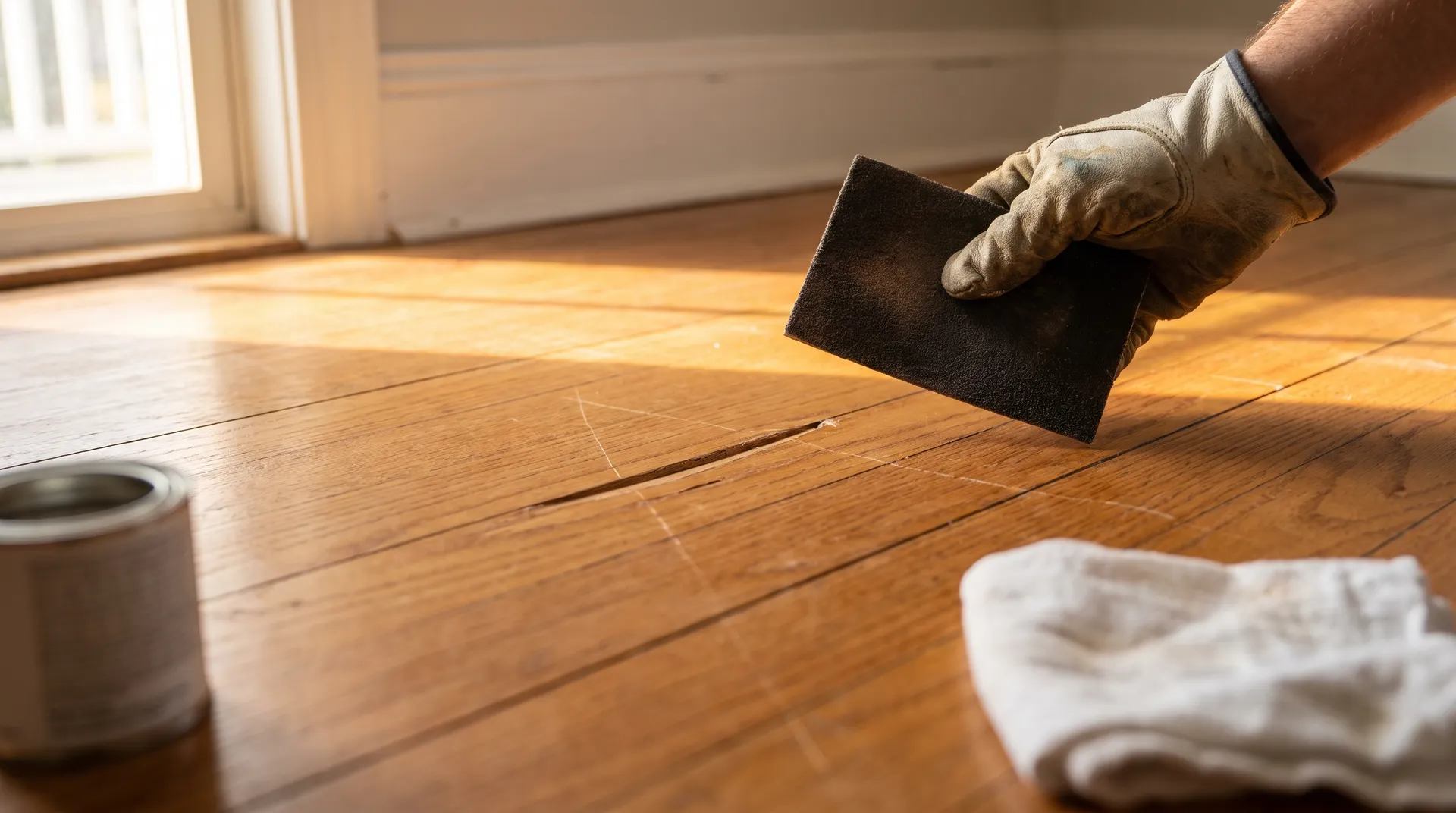
It depends on how deep the scratch is. A scratch that's only in the finish can often be hidden with a hardwood floor cleaner and a fresh coat of finish over that area, or with a clean and recoat on the whole room. A scratch into the wood can be touched up with a stain marker or color-matched wax filler. Deep gouges and dents usually need the area sanded and refinished, or the damaged boards replaced and blended in.
Can you refinish a hardwood staircase?
Yes. Stair treads can be sanded, stained, and refinished like a floor, but most of the work is done by hand or with small sanders, so the job takes longer per square foot. Risers are often painted for contrast, which also saves time. Plan for the stairs to be out of use while the finish dries, or have every other step done at a time if the stairs are the only way up.
How many times can you refinish a hardwood floor?
A standard 3/4-inch solid hardwood floor can usually be fully sanded about four to six times over its life, because each sanding removes only a small amount of wood. Engineered hardwood depends on how thick its top wear layer is, and some can't be fully sanded at all. Doing a clean and recoat before the finish wears through can stretch out the time between full sandings.
Can you stay in your house while hardwood floors are being refinished?
Often you can, as long as the rooms being worked on are closed off and you have another way around them. Water-based finishes have much less odor and are easier to live with. With oil-based finishes, many families, and especially people with pets, small children, or breathing sensitivities, stay somewhere else for a day or two while the strongest fumes clear.
Should I refinish my hardwood floors myself or hire a pro?
DIY is possible, but the big drum sanders that do the work quickly can also gouge a floor in seconds if they pause in one spot, and those marks are hard to fix. Rental orbital sanders are safer but slow, and they may not fully level old, cupped, or heavily worn floors. If the floor has been sanded before, is engineered, or is going to be stained, the margin for error is smaller and hiring a professional makes more sense.
Is fall or winter a bad time to refinish hardwood floors?
No, as long as the house stays heated while the finish dries and cures. Expect finishes to dry a little slower in cooler, closed-up houses. Seasonal gaps between boards are normal in a Pennsylvania winter and shouldn't be filled. Water-based finishes are a common choice in cold months because they need less ventilation.