Refinishing vs. replacing hardwood floors: which costs less?
Refinishing costs less because you're paying for labor and finish, not for a new floor. Replacing means paying to remove the old boards, haul them away, fix the subfloor, buy new flooring, install it, and often finish it on site too.
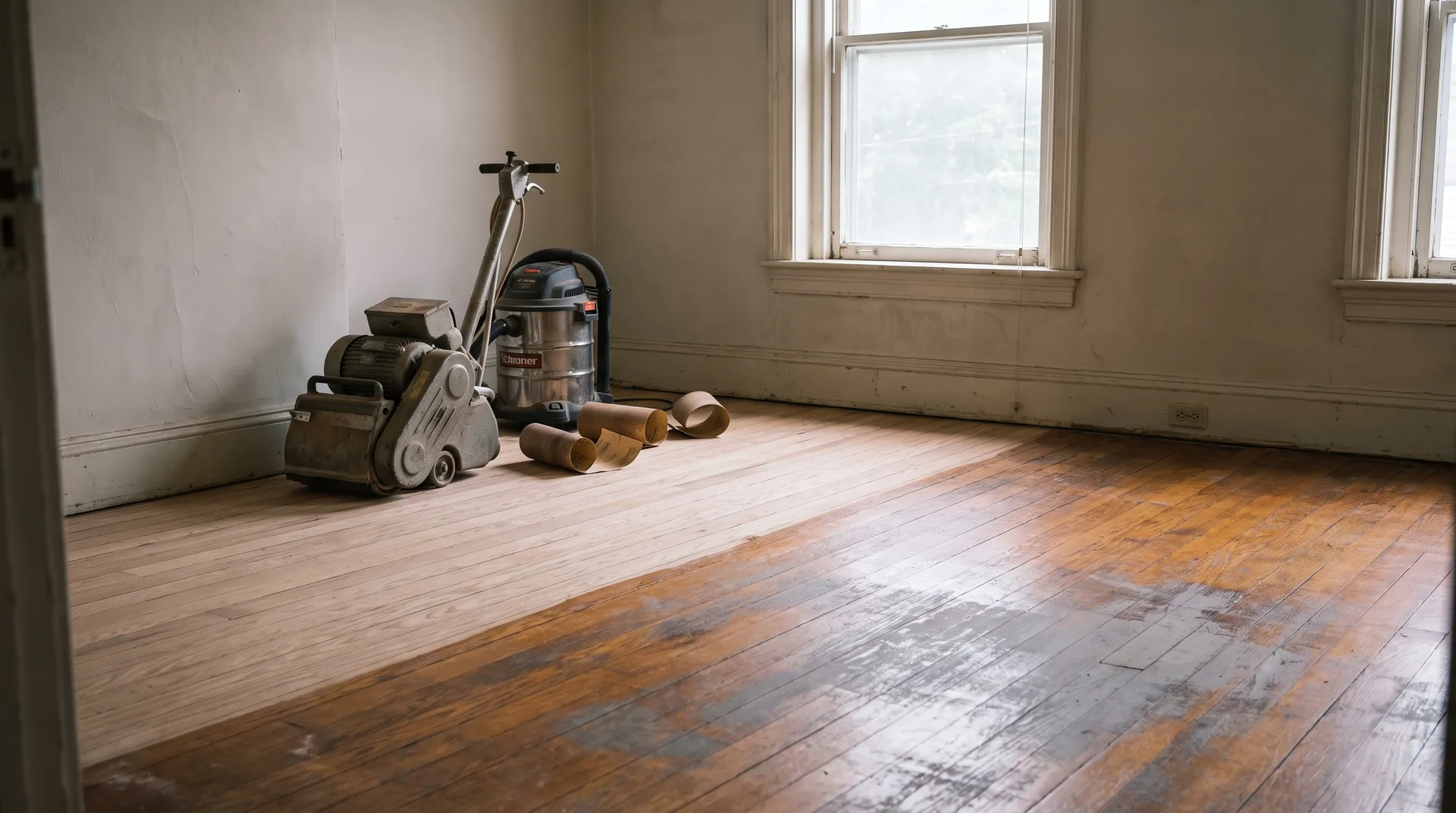
Refinishing works on the floor you already own. The old finish and a thin layer of wood get sanded off, the floor gets stained if you want a new color, and then it gets two or more coats of new finish. The boards stay nailed down and the trim and doorways stay as they are.
Replacing has more steps, and every one of them costs time and money. Tear-out is messy and slow. New hardwood has to sit in the house to adjust to it before it goes down. Unfinished boards still need the same sanding and finishing a refinish would get. So replacing a site-finished floor really means paying for a new floor and a refinish.
The gap gets wider in older homes. Many houses across central Pennsylvania, from farmhouses to older in-town homes, have solid oak strip flooring, and it often turns up in good shape under old carpet. Wood like that is usually worth keeping.
Signs your hardwood floor only needs refinishing
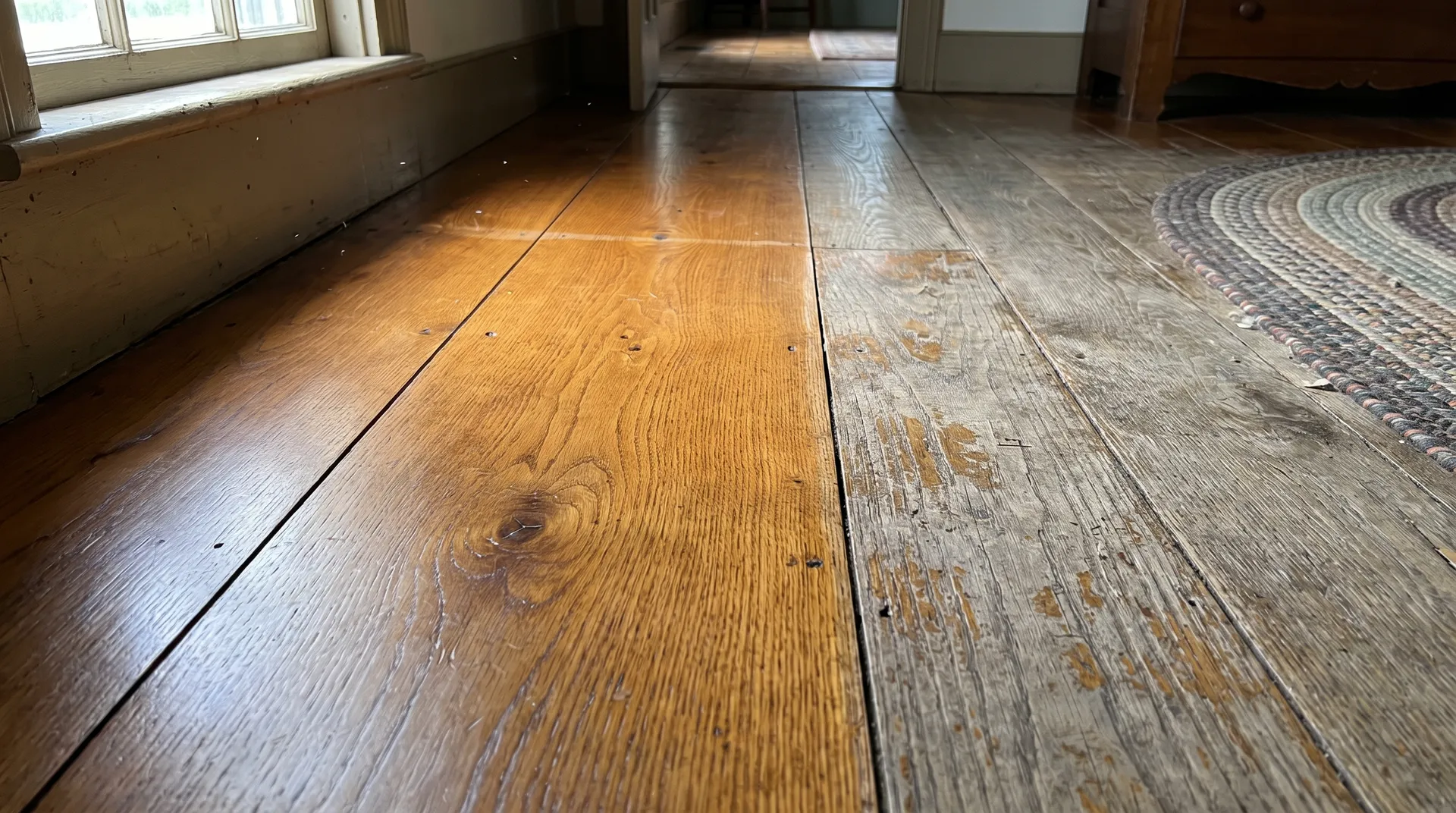
If the boards are solid and flat and there's enough wood left above the tongue, refinishing will usually bring the floor back. Worn traffic paths, gray or bare spots, scratches into the wood, and a color you're tired of can all be fixed with a full sand and refinish.
Things refinishing usually handles: finish worn through to bare wood in hallways and doorways, sun fading near windows, scratches and dents from pets and furniture, old yellowed or orange finish, and stain colors that look dated.
A few damaged boards don't mean you need a new floor. Single boards with deep gouges, cracks, or a dark stain can be cut out and replaced with matching wood, then sanded along with the rest of the room so the repair blends in. When we repair a section or extend a floor, we match the color and finish so the change from old to new looks natural.
Charlie's Sanding & Refinishing is a hardwood floor company based in McAlisterville, PA. We sand, refinish, stain, repair, and install hardwood floors and staircases, and we install LVP, within about 60 miles of home, with State College and Harrisburg as our main cities.
When should hardwood floors be replaced instead of refinished?
Replace a floor when the wood itself has failed or there's nothing left to sand. The common reasons are water damage that has rotted the boards or subfloor, floors that have been sanded so many times the nails or tongues show, and engineered flooring with a wear layer too thin to sand.
Other signs point the same way. Boards that stay badly cupped or buckled after the moisture problem is fixed, soft spots that flex underfoot, and pet urine that has soaked deep into a large area and turned the wood black. Sanding won't fix any of those.
Sometimes replacing is about what you want, not what's wrong. If you want a different species, wider boards, a new layout, or the same flooring through rooms that don't match now, refinishing can't do that.
There's also a middle path. If the damage is limited to one area, such as in front of a sink or by a back door, replacing just those boards and refinishing the whole room usually costs far less than a new floor everywhere.
Is a clean and recoat cheaper than refinishing?
Yes. A clean and recoat is the least expensive way to freshen up a hardwood floor, but it only works when the wear is in the finish and hasn't reached the wood. The floor gets deep cleaned, the old finish is lightly buffed so the new coat will stick, and a fresh coat of finish goes on, all without sanding to bare wood.
It's a good fit for floors that look dull, have light surface scratches, or have lost their sheen in high-traffic spots but still have finish everywhere. It can't change the stain color, take out deep scratches, or fix spots that have gone gray where the finish wore through.
Floors in busy homes often get a recoat every few years. Doing that before the finish wears through to the wood can push back the need for a full sanding by a long time, and every sanding you skip leaves more wood for the future.
One caution: a recoat has to bond to what's already on the floor. Floors that have been waxed, or treated with some polish-type products sold for shine, may not take a new coat until that buildup is removed.
How many times can you refinish hardwood floors?
A solid 3/4-inch hardwood floor can typically be fully sanded and refinished somewhere around four to six times, and sometimes more, depending on how much wood each sanding takes. Engineered hardwood can be refinished fewer times, and sometimes not at all, depending on how thick its top layer of real wood is.
Solid strip flooring has roughly a quarter inch of usable wood above the tongue. A careful sanding takes off only a small part of that, so a floor sanded every 10 to 20 years can last for generations.
Engineered flooring has a real wood top layer over plywood or another core. A thick top layer may be sanded once or twice. A very thin one should only get a clean and recoat. If you aren't sure what you have, pull a floor vent or look at the edge of a board at a doorway or stair. The cross-section will show whether it's solid wood all the way through or has a layered core.
If your floor has been sanded several times before, it's worth having someone look at the thickness before you decide. That one check can settle the refinish-or-replace question.
Refinishing or replacing floors in central Pennsylvania's fall and winter
Fall and winter work fine for refinishing and installing hardwood in central Pennsylvania. The two things to plan around are dry indoor air once the heat comes on and the ventilation the finish needs while the windows are mostly closed.
Hardwood shrinks as heated air dries it out, so thin gaps between boards in January are normal and usually close back up in the humid months. Don't judge a floor by its winter gaps alone. Wide gaps that stay open all year, or cupping that doesn't settle down, are a different story and can point to a moisture problem that has to be fixed first.
For refinishing in cold weather, finish choice matters. Water-based finishes have less odor and dry faster, which helps when you can't open the house up much. Oil-based finishes give a warmer amber tone that many people like on older oak, but they have a stronger smell and need more time between coats. We work with both and choose based on the look you want, how you use the floor, and the character of the house.
For new floors, the boards need time inside the heated house before they go down, so they adjust to its winter humidity. If you're aiming to have work done before the holidays, leave room in the schedule for that, and for the finish to cure before heavy furniture and rugs go back.
Questions we hear
Can I stay in my house while floors are refinished?
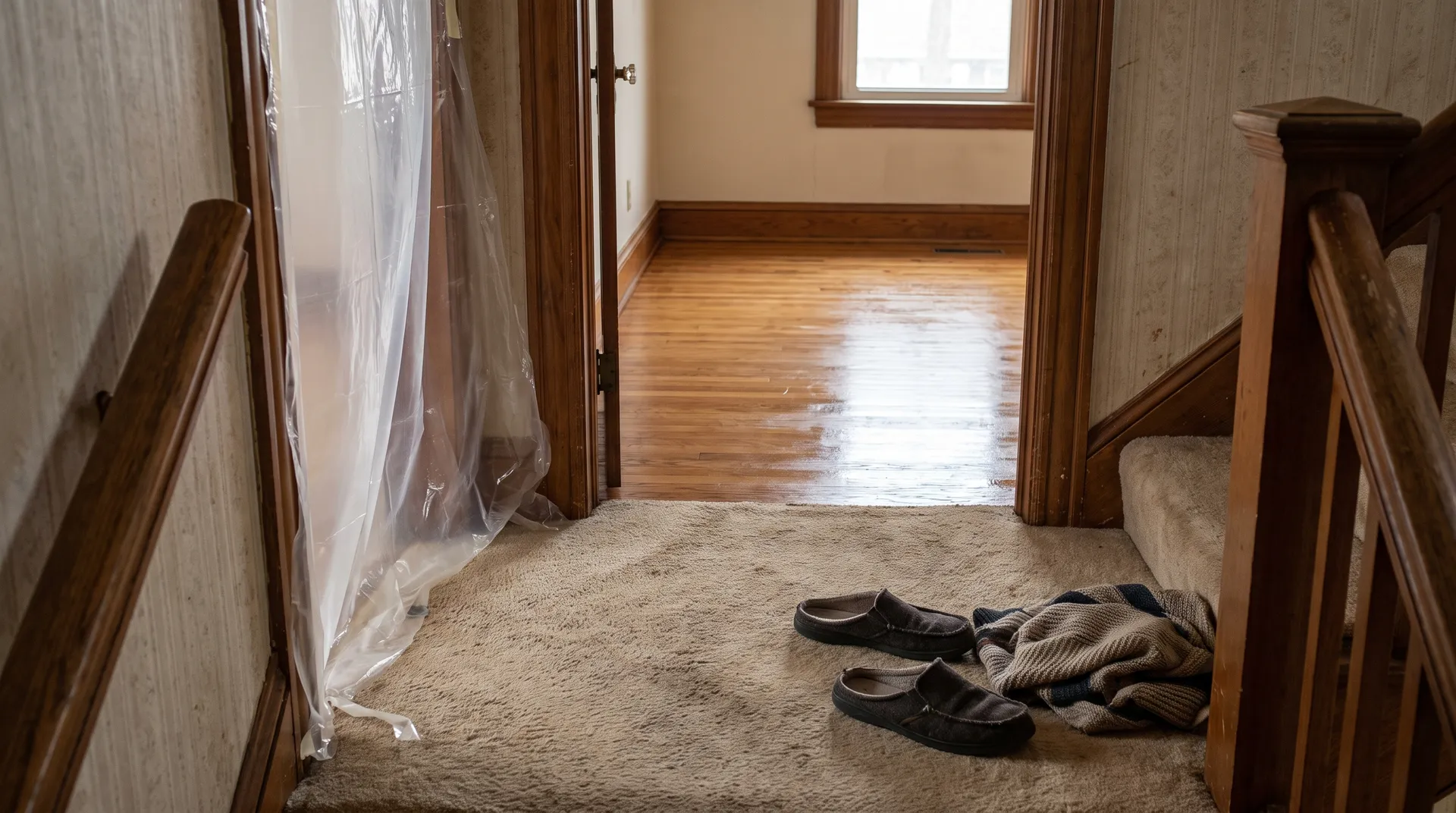
Often yes, as long as you can get around the rooms being worked on, but plan on staying off the new finish for at least a day after each coat. With water-based finishes, many people stay home. With oil-based finishes, the stronger smell leads a lot of families to stay somewhere else for a couple of days. Dust is less of a concern than it used to be: we use a professional vacuum system that captures up to 99% of the dust, and we move the furniture and appliances ourselves.
Can you put new flooring over old hardwood?
Yes. Floating floors like LVP or engineered planks can go over hardwood that's flat and solidly fastened. The added height can affect door clearances, transitions to other rooms, and appliance openings, so check those first. If the hardwood underneath is in decent shape, keep in mind that refinishing it may cost less than covering it, and it keeps real wood in the house.
How do you repair a scratch in a hardwood floor without refinishing?
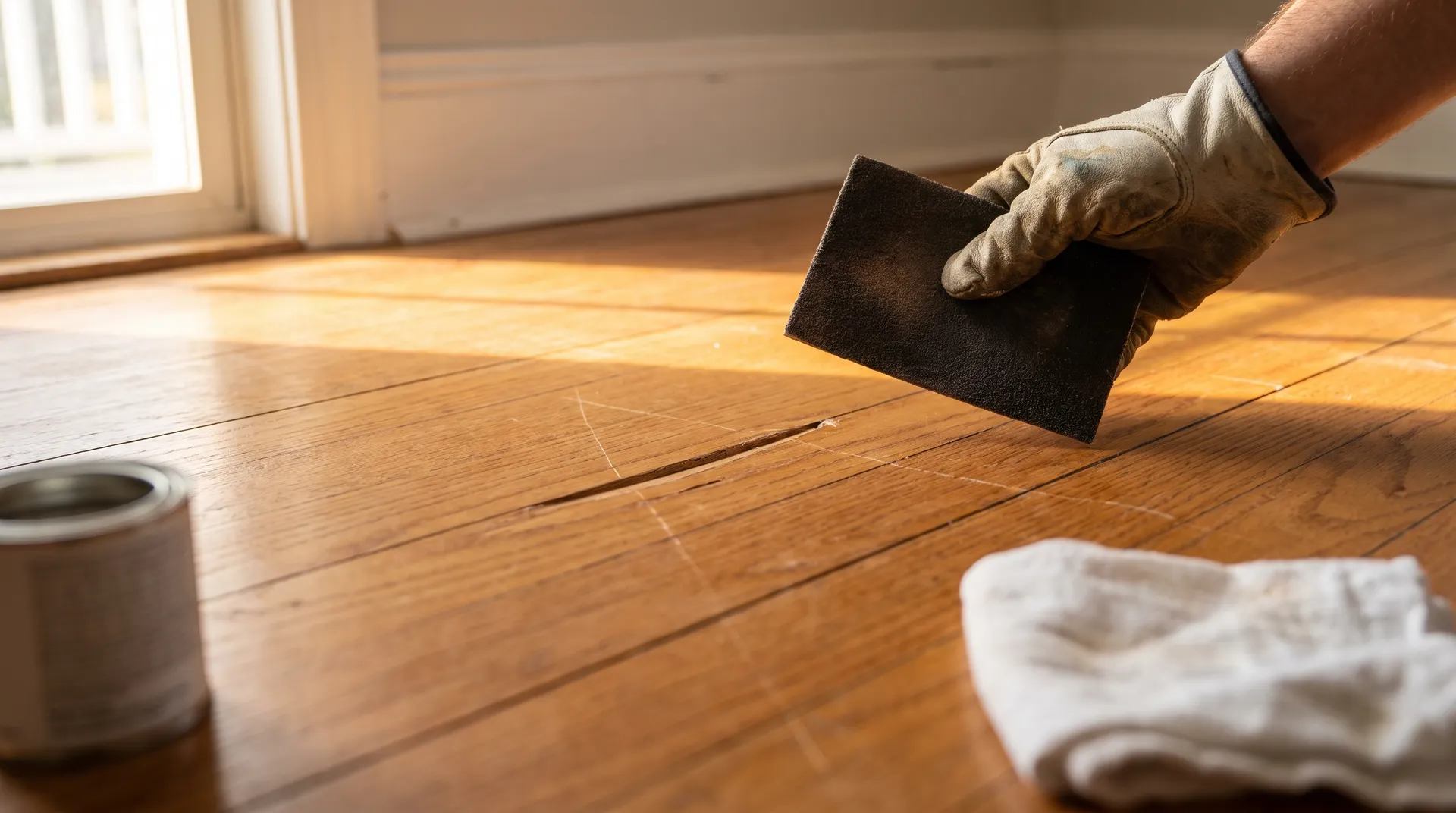
If the scratch is only in the finish, a clean and recoat over the room will usually make it disappear. If it has gone into the wood, a stain marker or wax fill stick can hide a small one, but it won't match perfectly. Deep gouges or a damaged board are better fixed by replacing that board and blending it in. Spot-sanding a single scratch usually leaves a patch that looks different from the floor around it.
Can I refinish a hardwood floor myself?
You can. Rental sanders are available, and some homeowners get good results. The risk is in the sanding: a drum sander left in one spot for a moment can cut a dip or leave chatter marks, and every mistake uses up wood the floor can't get back. If you want to try, a small room is a safer place to start than a whole downstairs, and a buffer with fine screens is much more forgiving than a drum sander.
How long should hardwood sit in the house before installing?
Usually several days to a week or more. The real test is a moisture meter, not the calendar. The boards should come within a few percent of the subfloor's moisture content and match the conditions the house will normally have. In central Pennsylvania's heating season, that means letting them adjust with the heat running as it normally would, not in a cold, closed-up room.
How long does refinishing take compared to replacing?
A typical refinish takes a few days from sanding through the final coat, and longer with stain or oil-based finish. Replacing adds tear-out, subfloor repair, time for the new boards to adjust indoors, and installation, and then site-finished floors still go through the same sanding and finishing. In both cases, full cure takes a few weeks, so wait before putting rugs back down.