What does staining a hardwood floor involve?
Staining is one step inside a full sand and refinish. The old finish and some wood come off, color goes into the raw wood, and new clear coats seal it in.
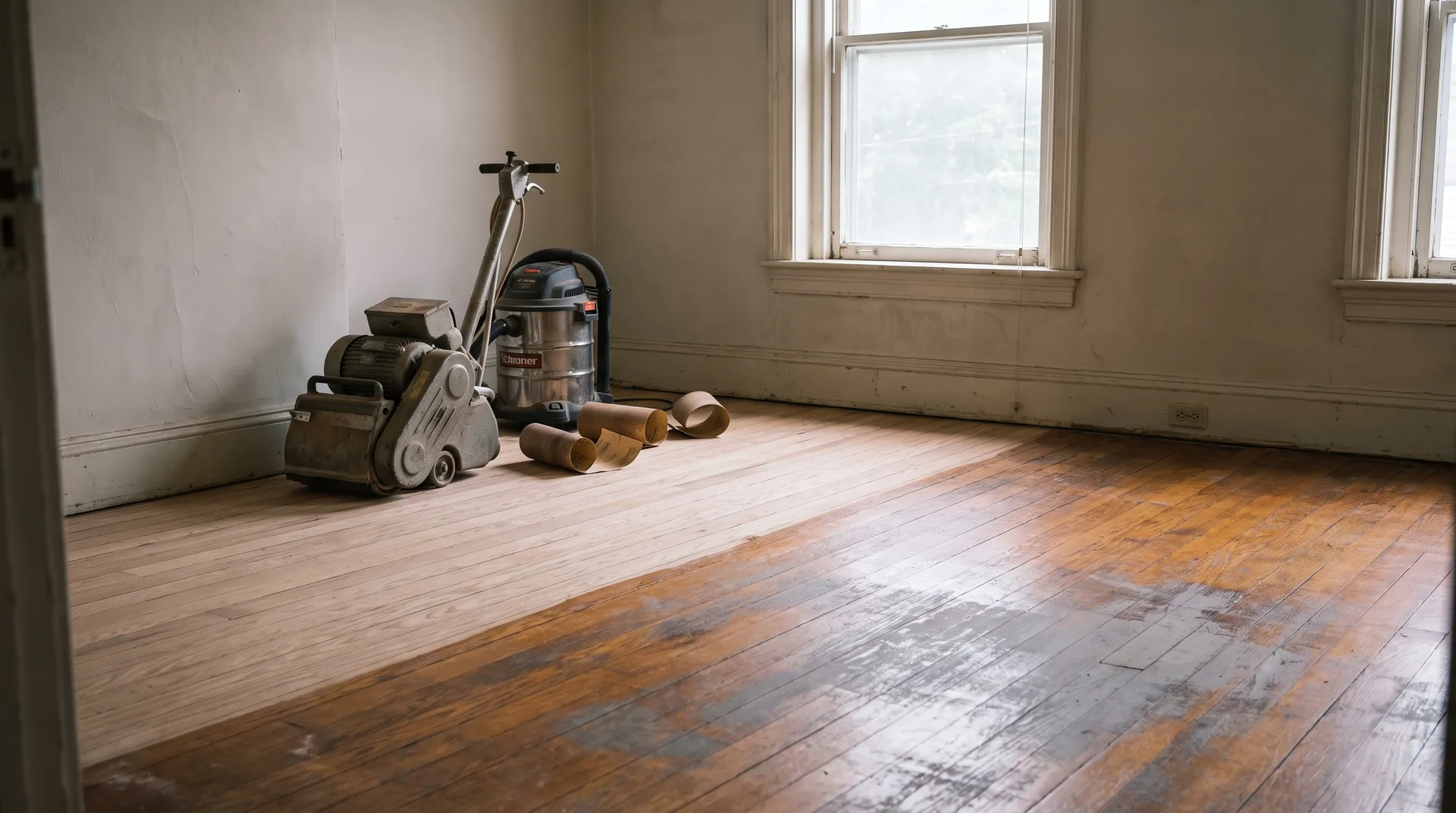
The sanding usually takes three passes: a coarse grit to cut through the old finish, a medium grit to take out those scratches, and a finer grit to smooth the surface, usually somewhere between 80 and 120. Edges and corners get the same treatment with an edger and hand tools. The final grit matters more than most people expect. Sanding finer closes up the wood's pores, so the stain comes out lighter. Sanding coarser opens them up, so it comes out darker. Every sander mark that's left behind will soak up extra stain and show through as a dark swirl or line.
After sanding comes a thorough vacuum and tack. Then the stain is applied one section at a time, left for a few minutes, and wiped off before it starts to set. Some refinishers also do a water pop first: they dampen the bare wood so the grain stands up and takes stain more deeply and evenly. That's common with darker colors. Once the stain is dry, the clear finish goes on in two to four coats, usually with a light buff between coats.
Charlie's Sanding & Refinishing is based in McAlisterville, PA. We sand, stain, refinish, repair, and install hardwood floors, and we refinish staircases for homes across central Pennsylvania, including State College and the Harrisburg area.
How long does it take for stain to dry on hardwood floors?
Oil-based floor stain typically needs 8 to 24 hours before the first coat of finish can go on. Water-based stain is often ready in one to four hours. Temperature, humidity, and how heavily the stain was applied all change those numbers.
Here's how the whole job usually lays out: a day to sand, a day to stain and let it dry, and then one to three days of finish coats. Oil-based polyurethane usually means one coat a day. Water-based finishes can often take two or three coats in a single day. Socks-only foot traffic is generally fine 24 to 48 hours after the last coat. Furniture usually waits three to seven days, and rugs wait two to four weeks while the finish fully cures.
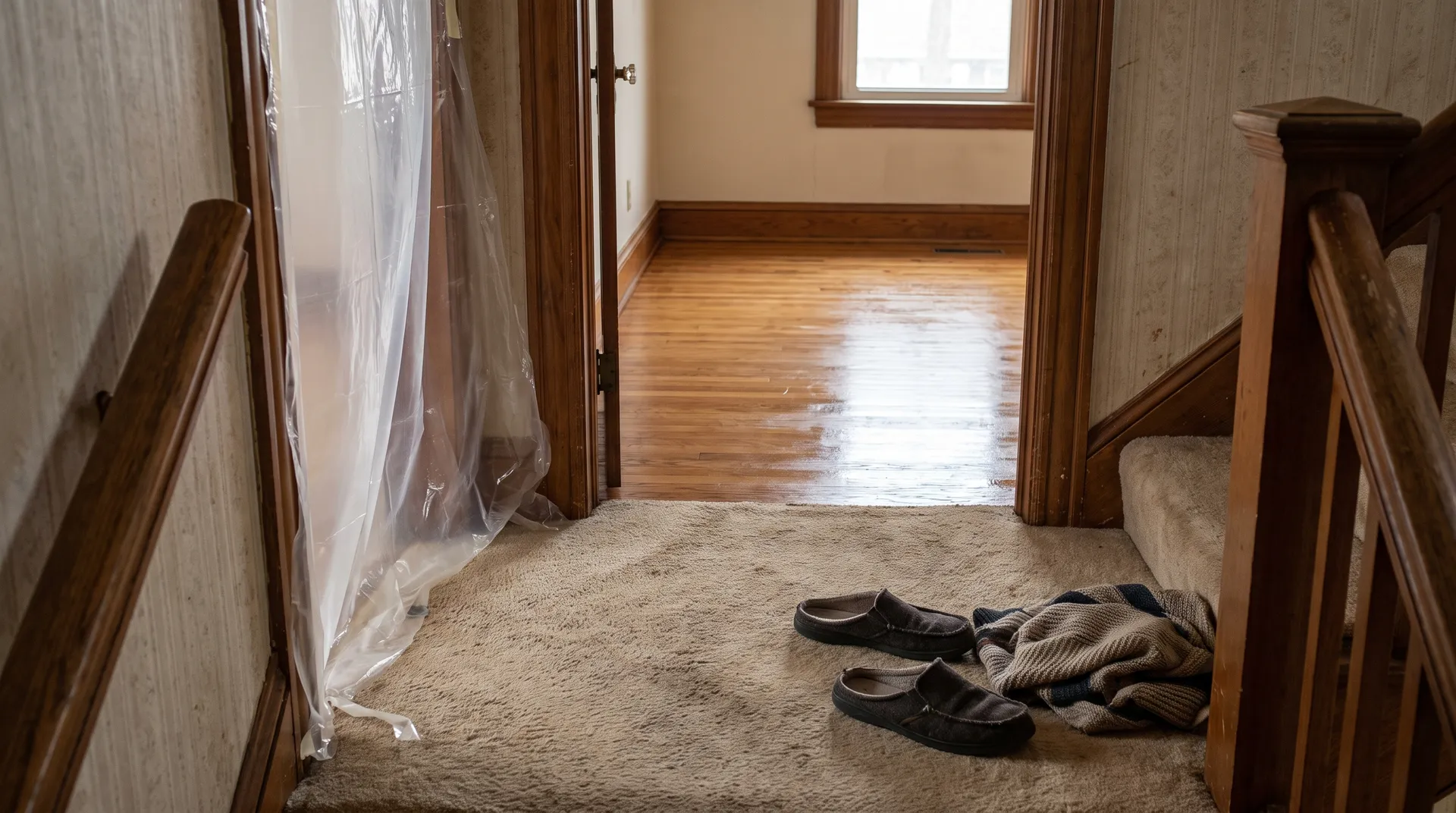
In central Pennsylvania, the season makes a real difference. Humid summers slow drying, and stain or finish put on too heavily in muggy weather can stay tacky. Once the heat comes on in fall and winter, the air inside gets dry and finishes set faster. Dry air also opens small gaps between boards, especially in older strip floors. Most finish makers want the room kept somewhere around 65 to 75 degrees during the job and while it cures. So don't turn the heat off to save money while you're out of the house. With windows mostly shut in cold weather, odor matters more too, and that's one reason a lot of people pick water-based products for fall and winter work.
Which hardwood species take stain well, and which blotch?
Red oak and white oak take stain the most evenly, which is a big reason oak is so common. Maple, birch, pine, and cherry tend to blotch. Light colors are safer on those woods, and some of them shouldn't be stained dark at all.
Red oak has open grain that soaks up color readily, and a lot of the older homes in this part of the state have red oak strip flooring. White oak takes stain well too and stays a little cooler in tone. It's also the usual pick for the grays and modern browns that are popular now.
Maple and birch have a tight, dense grain that absorbs stain unevenly, which leaves splotchy patches. That's especially true with darker colors. Pine and fir, which you'll find in many older farmhouses, are soft and blotch easily as well. A wood conditioner, water popping, or a lighter stain can help. On some of these floors, a natural finish with no stain ends up looking better and lasting longer. Cherry and other woods that darken with age will keep changing color under any stain, so plan around where the wood is headed, not just how it looks on day one.
Old floors also have a limit you can't see. Every sanding takes some wood off, and a floor that's been refinished several times may not have much left above the tongue. Check that before planning on a big color change.
How do you choose a hardwood floor stain color?
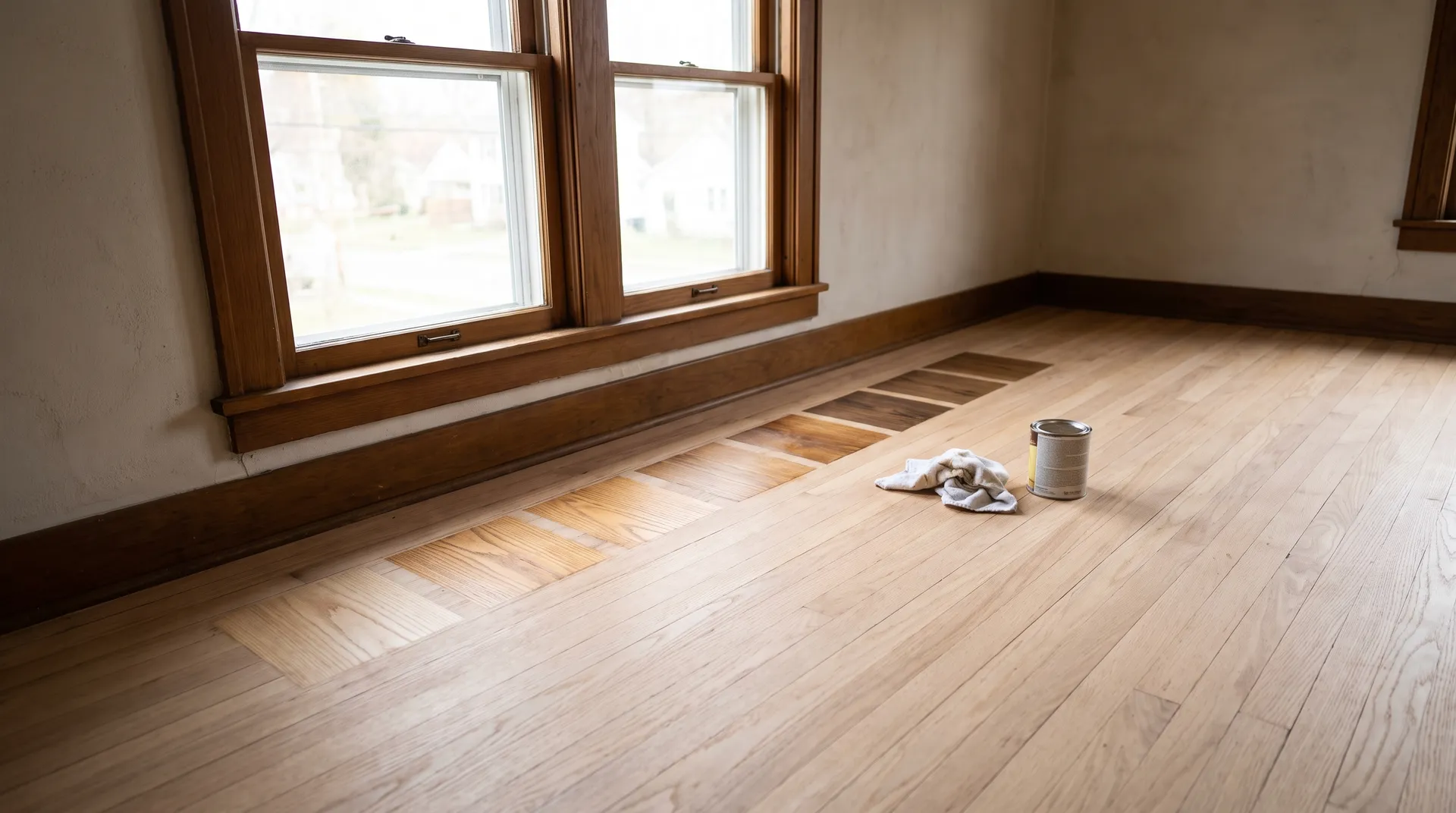
Put sample patches of two or three colors right on your own floor, then look at them in daylight and lamplight before you decide. The same stain can look very different on your wood than it does on a store sample or in a photo.
The topcoat changes the color too. Oil-based polyurethane adds a warm amber tone that deepens over the years. Water-based finishes stay much clearer, which keeps grays, whites, and light naturals looking the way they did when they went down. We work with both, and the choice depends on the look you want, how the room gets used, and the character of the house. Make sure your samples get the same topcoat the floor will get, or the colors won't match.
Think about upkeep as well. Very dark floors look striking, but they show dust, pet hair, and scratches the most. Very light floors show dirt and tracked-in grit. Mid-tone browns hide the most everyday wear. If the stained floor will meet an existing floor in a doorway or an addition, getting the color right matters even more. When we extend or repair a floor, we match the color and finish so the transition looks natural.
Can you stain hardwood floors without sanding?
No, not if you want real stain. Stain has to soak into bare wood, and the finish already on your floor blocks it. To change the color, the old finish has to come off.
There are products that add color without sanding, such as tinted polyurethanes and some gel stains. They sit on top of the old finish like a colored layer, not inside the wood. They tend to look muddy, they hide the grain, and when they wear through in walkways, the original color shows through underneath. They're hard to touch up cleanly.
If you like your current color and the floor just looks dull or lightly scuffed, a clean and recoat may be all it needs. The floor gets deep cleaned and lightly abraded, then gets a fresh coat of clear finish. There's no sanding to bare wood, it takes much less time, and it costs much less, but it won't change the color or take out deep scratches or gray, worn spots. Doing it every few years, before the finish wears through, can push back a full refinish for a long time.
Should you stain hardwood floors yourself or hire a pro?
Staining is one of the least forgiving steps in floor work. Every flaw from sanding shows up darker under the stain, so it helps to have an experienced hand on the sander. A careful homeowner can manage a small room of red oak. Larger areas, blotch-prone woods, and dark colors are where most do-it-yourself jobs go wrong.
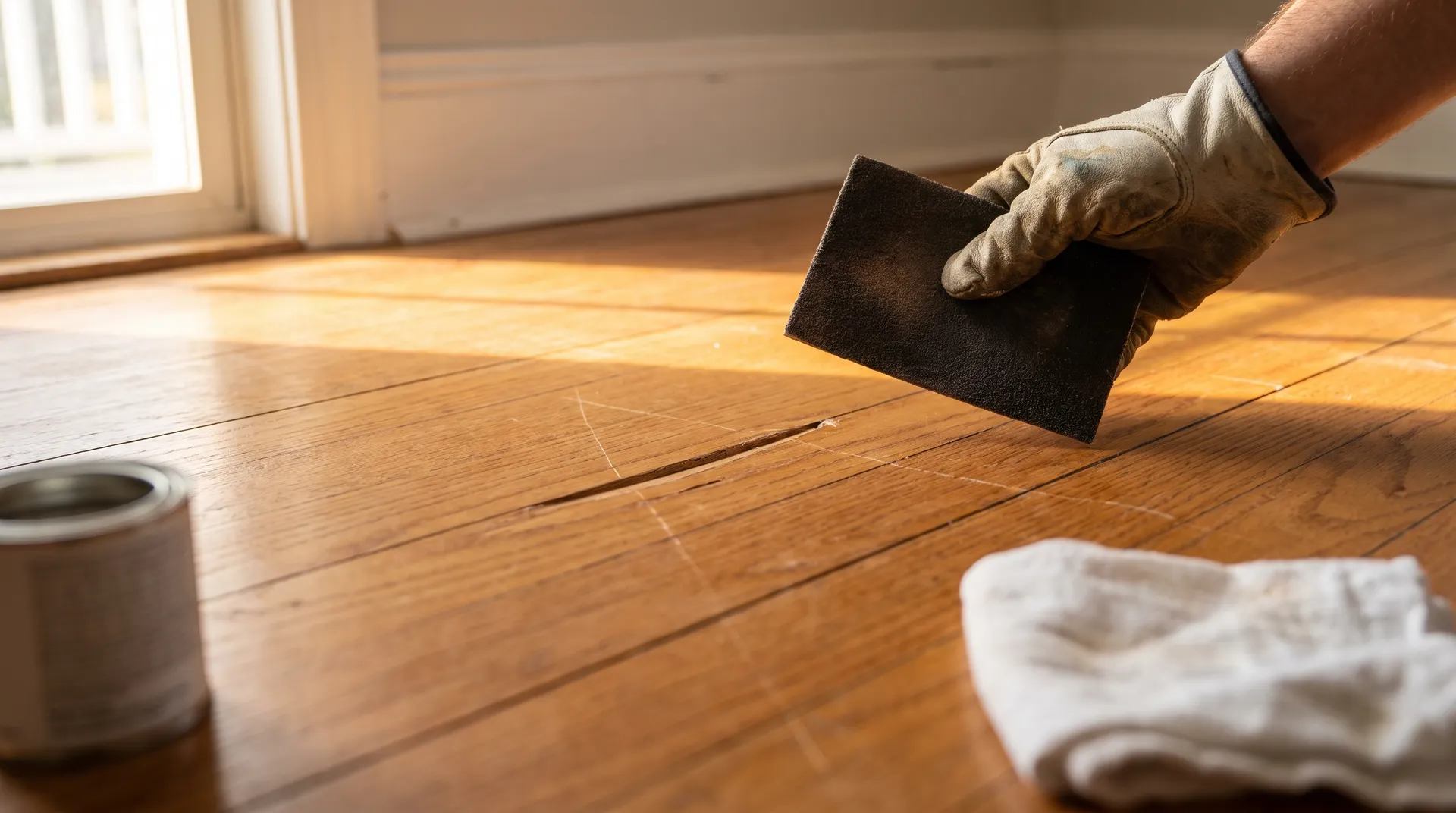
The usual DIY problems are swirl marks from orbital sanders, a dark picture frame where the edger cut deeper than the big sander, lap marks where stain dried before it was wiped, and blotching on maple or pine. Fixing any of them means sanding the floor back to bare wood and starting over. Rental drum sanders take wood off fast, and one gouge in an older floor can't always be sanded out.
If you do it yourself, give yourself plenty of time. Test your color in a closet first, work in sections small enough to wipe before the stain sets, and keep a wet edge. Wait the full drying time before any finish goes on. Also think about dust and moving furniture. Sanding a whole floor throws off a lot of fine dust, and that's why we use a professional vacuum system that captures up to 99 percent of it. We also move appliances and furniture and pull toilets and trim when the job calls for it.
Questions we hear
Can you stain hardwood floors a lighter color?
Sanding takes off the old stain and brings the floor back to the wood's natural color, so you can go lighter than a dark floor is now. Going lighter than the bare wood itself takes wood bleach or a white-tinted stain, and that's more work and less predictable. Water-based finishes help keep light colors from yellowing over time.
How long does stain last on hardwood floors?
The stain itself lasts as long as the wood under it. It only goes away when the floor gets sanded again. What wears out is the clear finish on top. Depending on foot traffic, pets, and upkeep, that finish usually needs a recoat every three to seven years to keep the stain protected.
Can you stain engineered hardwood?
Sometimes. Engineered hardwood has a real wood top layer, and if that layer is thick enough to sand down to bare wood, it can be stained like solid hardwood. Thin wear layers may not survive a sanding at all. Check the wear layer thickness before planning a color change, often by pulling a floor vent or looking at an exposed edge.
Do you need to leave the house while floors are stained?
You can't walk on the floors while stain and finish are drying, so most people stay somewhere else, or at least keep out of those rooms, for a day or more. Oil-based stains and finishes have a strong odor that can last several days, which matters for kids, pets, and anyone sensitive to fumes. Water-based products have much less odor and dry faster.
Can you stain prefinished hardwood flooring?
Prefinished boards come with a hard factory finish, often with aluminum oxide in it, so stain can't get into the wood. To change their color, you have to sand through that factory finish, which is tough and uneven across beveled edges. If you want a custom color on new floors, unfinished hardwood that gets sanded and stained after it's installed is usually the better choice.
What is the best time of year to stain hardwood floors in Pennsylvania?
Floors can be stained any time of year as long as the house stays between roughly 65 and 75 degrees with moderate humidity. Late spring and early fall are usually the easiest, because you can open windows for fresh air without fighting summer humidity or freezing nights. In winter, keep the heat running steadily during the job and the cure.